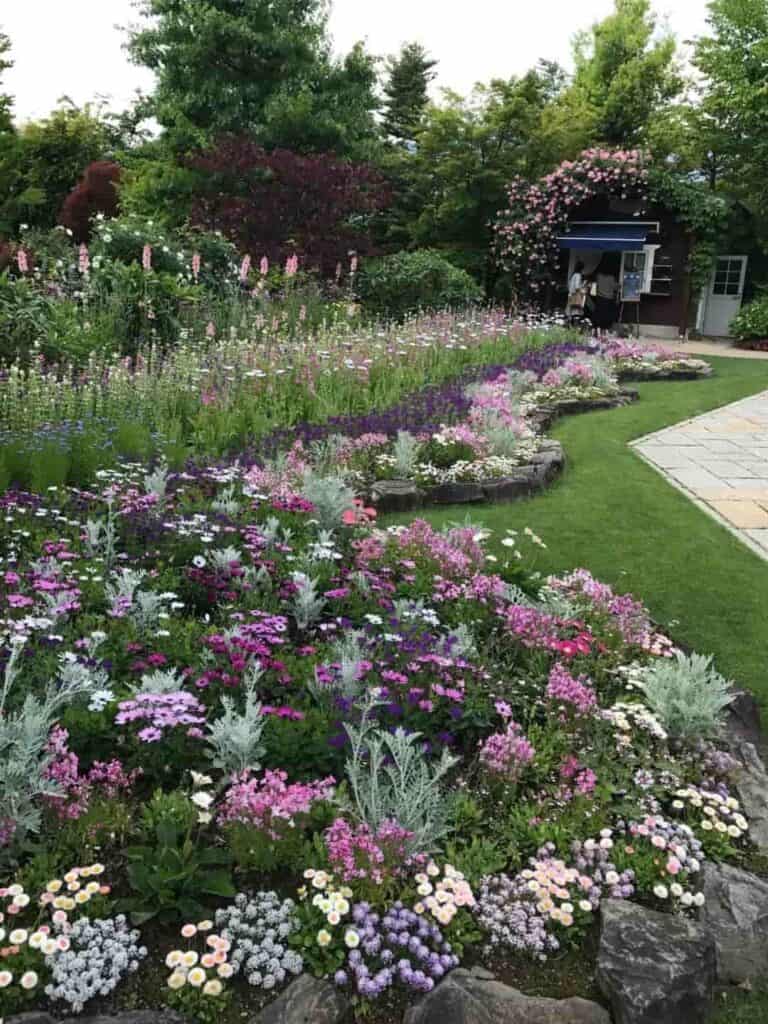
Let’s be real. Are you tired of the annual springtime ritual of spending a small fortune on those flimsy six-packs of petunias, only to watch them flame out in a dramatic, crispy death by August? Do you look at your garden in May and feel a surge of hope, and then look at it again in September and feel the profound shame of a botanical murder suspect?
But what if I told you there’s a better way? A lazier way? A way where your flowers don’t just give up the ghost after one season, but instead, they get up, dust themselves off, and come back year after year, bigger and better, with nothing more than a cheerful wave in your general direction?
Welcome to the glorious, low-maintenance world of perennials. These are the loyal friends of the plant world. They’re the flowers that move in and never leave. They provide months of interest, require shockingly little effort, and are so beginner-friendly it’s almost ridiculous.
Let’s dive into my top 15, and I promise not to bore you—because if there’s one thing perennials aren’t, it’s boring.
1. Roses: The Underrated Drama Queens

People often think of roses as fussy, high-maintenance divas that require a PhD in fungal diseases and a personal therapist for their aphid anxieties.
But I’m here to tell you they are one of the most underrated perennials out there.
They’re iconic for a reason: their colors, their forms, that unbeatable scent. They’re popular globally because, when happy, they are ridiculously generous.
I am a devoted fan of David Austin Roses, the English breeders who took old-fashioned romance and crossed it with modern resilience.
My heart belongs to ‘Olivia Rose Austin’, an explosion of soft pink, perfectly cupped blooms that smells like fruity heaven.
And ‘The Lady of Shallot’ is a fiery apricot-orange beauty that seems to laugh in the face of less-than-ideal weather.
Beyond the Austins, I adore the quirky ‘Distant Drums’ with its moody, mauve-and-old-gold blossoms, and the classic, creamy pink ‘Easy Spirit’ hybrid tea that lives up to its carefree name.
My advice? Plant at least one rose. Just one. It’s a long-term relationship. I’ve had some of mine for seven years now.
I started them in containers on an apartment balcony (yes, you can absolutely grow roses in pots!), and when I finally had a garden, I planted them in the ground where they’ve thrived ever since.
They’re hardy in Zones 5–10, with many new varieties bred for the icy tundras of Zones 3 and 4.
A word of caution: some of the longer canes aren’t fully cold-hardy, so in colder zones, a little extra winter mulch is their equivalent of a cozy blanket.
And for a dose of perspective, consider this: roses can live for over a hundred years. Let that sink in.
There is a rose bush growing on the Cathedral of Hildesheim in Germany that is documented to be over one thousand years old.
It has literally seen the High Middle Ages. Your rose is not just a plant; it’s a legacy. Don’t you want a piece of that?
2. Echinacea (Coneflowers): The Tough Native Beauties

If perennials had a rodeo, Echinacea would be the champion. This is a classic perennial that blooms from early summer straight through to fall, asking for nothing but a sunny spot and your occasional admiration.
They are drought-tolerant, deer-resistant, and so low-maintenance I sometimes forget they’re there until they burst into color.
You can find them in pinks, purples, whites, and yellows now, but my heart will always belong to the original Purple Coneflower (Echinacea purpurea).
It’s the platonic ideal of a daisy-like flower, with its reflexed petals and that prominent, spiky orange-brown cone in the center (hence the name).
Beyond being a garden workhorse, it’s a medicine cabinet staple. I often make a herbal tea from the leaves and petals for immune support, especially when I feel a sniffle coming on. (Disclaimer: This is informational chat from a plant enthusiast, not medical advice. Please don’t sue me; consult your doctor before using any plant medicinally!).
Most importantly, they are pollinator magnets. Bees and butterflies will flock to them, and you can feel good about supporting your local ecosystem.
Plus, they make fantastic, long-lasting cut flowers. They’re hardy from Zones 3–9 and are native to the Eastern and Central U.S., which means they’re perfectly happy to thrive without you dumping a bunch of fertilizer on them.
They’re the ultimate independent plant.
3. Daylilies: The Prolific Show-Offs

The name sounds like a limitation—“Oh, the flower only lasts a day.”
Do not be fooled. This is nature’s version of a relentless, 24/7 blooming factory.
From early summer to fall, daylilies send up scape after scape loaded with buds, each one opening for a single, glorious day before the next one takes its place.
It’s a floral relay race.
They are prolific, long-blooming, and laughably low-maintenance. The color range is staggering, and there are even reblooming varieties that give you a second, spectacular show.
The key to a months-long display is to plant a mix of early, mid, and late-season bloomers.
They’re happy in Zones 3–9, prefer a decently moist, well-drained soil and full sun.
And many are “evergreen” daylilies, which means even when they’re not blooming, they provide a lovely fountain of grassy green foliage.
Some of my favorite varieties are the frilly ‘Wild Frills’, the incredibly fragrant ‘So Sweet’, and the elegant, pure white ‘Joan Senior’.
4. Blanket Flowers (Gaillardia): The Vivid Sun-Worshippers

If your garden gets baked in the sun and you sometimes forget to water (no judgment), Blanket Flowers are your new best friend.
These drought-tolerant, sun-loving heroes bloom from early summer until the first hard frost, sporting vivid, daisy-like flowers in fiery shades of red, orange, and yellow.
They look like they were colored by a child with a brand-new set of markers—pure, unadulterated joy.
Native to North and South America, they’re hardy from Zones 3–10. My one pro-tip for these: deadhead them regularly.
That’s just a fancy gardening term for snipping off the spent flowers. This tells the plant, “Hey, your plan didn’t work, try again!” and it will push out a whole new round of blooms.
They add a bold shot of color and make a real statement.
5. Yarrow (Achillea): The Indestructible Healer

Yarrow is the tough guy of the perennial world. It’s low-maintenance, drought-resistant, deer-resistant, and basically laughs at poor soil.
It produces flat-topped clusters of tiny, long-lasting flowers in white, yellow, pink, and red from early summer to fall.
A North American native, it’s a pollinator paradise. But it also has a storied history. Its botanical name, Achillea, comes from the legend that Achilles used it to treat his soldiers’ wounds on the battlefield.
Historically, it’s been used for everything from soothing bug bites to stopping bleeding and healing wounds.
(Please note: This is a cool historical fact, not a prescription. I am a gardener, not a doctor. Do not attempt to treat a battlefield wound with yarrow based on this blog post. Please consult a physician before using any herb medicinally!)
It’s a fascinating, tough, and beautiful plant that deserves a spot in any lazy gardener’s plot.
6. Lavender: The Fragrant, Woody Rebel

Ah, lavender. The scent of serenity, of Provencal fields, of expensive candles. It’s a sun-loving, drought-tolerant superstar with fragrant purple or blue flower spikes that bloom from late spring through summer.
It’s perfect for herb gardens, borders, and dried arrangements, and it attracts bees and butterflies like nobody’s business.
But here is my cautionary tale: lavender is a woody herb. This is not a suggestion; it’s a fact.
It requires a good, hard pruning every winter to prevent it from getting leggy and woody.
I learned this the hard way. I neglected my lavender for a couple of seasons, and it transformed from a compact, lovely mound into a sprawling, woody beast that looked like a miniature, gothic tree and started overtaking my raised bed.
It was Lavender’s Revenge. Don’t be like me. Prune it.
It’s hardy in Zones 5–9 (can survive in 3-4 with protection). It also despises clay soil. I’ve killed more lavender plants by planting them in my native clay-based soil than I care to admit.
They need sharp drainage. Everyone says lavender and roses are perfect companion plants.
I tried this. It didn’t work, solely because my soil was a death sentence for lavender.
The roses thrived; the lavender… did not.
7. Peonies: The Fleeting, Flamboyant Royalty

Peonies are the supermodels of the spring garden. They are outrageously showy, with massive, often fragrant blooms in shades of pink, red, and white.
Their one drawback? They’re a bit of a flash in the pan, blooming spectacularly for about 2-3 weeks. But my goodness, what a flash it is.
When they’re in bloom, nothing else matters.
They are incredibly long-lived once established (think decades), but they do take a few years to settle in and really put on a show. They’re hardy from Zones 3–8.
Now, I need to get personal here. I currently garden in Zone 10. Growing peonies here is like trying to raise a penguin in the desert.
They need a good, cold winter chill to set buds, and my winters are… not that.
So I am throwing this out to you, dear readers: if you have successfully grown peonies in a warm climate (Zone 9 or even 10), please, for the love of all that is floral, tell me your secrets! What variety worked? I am desperate.
8. Shasta Daisies: The Cheerful, Spreading Optimists

Is there a happier flower than the Shasta Daisy?
Those bright white petals around a sunny yellow center are the botanical equivalent of a smiley face.
They bloom from early summer through fall, are incredibly easy to grow, and make wonderful, long-lasting cut flowers.
Hardy in Zones 5–9, they are low-maintenance with one little quirk: they spread via rhizomes underground.
This means every 2-3 years, you can dig up the clump, divide it with a shovel, and get two or three new plants for free! It’s the gift that keeps on giving.
9. Bee Balm (Monarda): The Party Animal for Pollinators

Bee Balm is fragrant, nectar-rich, and comes in electrifying shades of red, pink, and purple. It blooms from midsummer to fall and is the ultimate party spot for hummingbirds and butterflies. It’s a joy to watch.
Here’s a fun fact: Bee Balm is a masterclass in “nectar robbing.”
The flowers are tubular, designed for long-tongued pollinators like hummingbirds and moths. But bees, being the clever little things they are, will sometimes chew a hole at the base of the flower tube to steal the nectar without doing the pollination work! Cheeky, but effective.
It also has medicinal uses and is often called Wild Bergamot because its scent is similar to the Bergamot orange used in Earl Grey tea. (Important note: it is not the same plant. Don’t go making tea with the leaves unless you’ve done your research!).
10. Salvias (Sage): The Pollinator Powerhouses

If you want a plant that blooms for months on end with zero fuss, get a Salvia.
This massive genus offers a dizzying array of colors and sizes.
They are drought-tolerant, deer-resistant, and absolutely beloved by every pollinator on the block.
They are a staple in California gardens for a reason.
You’ve got the airy, purple wands of Russian Sage, the vibrant blues and purples of Hybrid Sages, and the more exotic Peruvian Sage.
Many are perfect for containers, ranging from 1 to 3 feet tall. And let’s not forget the common Garden Sage (Salvia officinalis), the culinary herb that makes Thanksgiving dressing possible. They’re hardy from Zones 4–10, depending on the type.
11. Rudbeckia (Black-eyed Susan): The Unkillable Sunshine

These are the epitome of cheerful summer blooms. Bright yellow petals with a dark, domed center—they are the friendly face of the late-season garden.
There are varieties with red tones and even lighter yellow ones like ‘Prairie Sun’.
They are drought-tolerant, low-maintenance, and bloom from midsummer well into fall. I had a clump that thrived for three glorious years with absolute neglect.
I only removed it because it had gotten so huge it was crowding other plants, and it had become a late-night snack bar for every slug and snail in the county.
They are hardy in Zones 3–10 and, if you’re tight on space, they do brilliantly in containers. They just want to make you happy.
12. Hydrangeas: The Big, Fluffy Divas (But in a Good Way)

Oh, hydrangeas. With their massive, showy flower heads in shades of pink, blue, white, and even green, they are the statement piece of the summer garden.
They bloom from summer to fall and are surprisingly low-maintenance once you understand their one big quirk: the sun.
They thrive in containers or the ground but generally prefer partial sun. They do not appreciate being baked all day long.
I have six hydrangeas in my garden, and they come back bigger and better every single year, to the point where I’m running out of room.
The main thing to know is there are two types:
- Type 1: Blooms on new growth (like Panicle and Smooth Hydrangeas). You can prune these in late winter/early spring without fear.
- Type 2: Blooms on old growth (like Oakleaf, Bigleaf, Mountain, and Climbing Hydrangeas). If you prune these at the wrong time, you’re cutting off next year’s flowers. I just don’t prune these ones. Problem solved.
The flowers can be dried and preserved, adding beautiful texture to your winter garden. They’re hardy from Zones 3–9 and are worth every inch of space they occupy.
13. Phlox: The Fragrant, Starry Carpet

Phlox are mounding perennials covered in clusters of fragrant, star-shaped flowers. They come in white, pink, red, and purple, and bloom from early summer to fall.
They’re perfect for borders, beds, and as cut flowers.
But the genius of Phlox is its range. You have:
- Creeping Phlox: A low-growing ground cover that creates a waterfall of color in spring.
- Woodland Phlox: Ankle-height and perfect for shady spots.
- Garden Phlox: The mid-height border staple.
- Tall Phlox: The back-of-the-border showstopper.
They are loved by pollinators, resistant to deer, and hardy in Zones 3–9. It’s a family with a member for every job.
14. Chrysanthemums (Mums): The Fall Festival in a Pot

Mums are the quintessential fall flower, available in every color and flower form imaginable. They bloom from late summer through fall and make excellent cut flowers.
Here’s the secret, though: if you want them to act as true perennials, plant them in the spring.
The gorgeous, dense mums you buy at the garden center in autumn have been pumped full of nutrients and hormones to look perfect right then.
Planting them just weeks before winter is a huge shock. But plant a mum in the spring, and it will have all season to establish roots and will return reliably for years.
My aunt has a Costco mum she planted in spring years ago that comes back bigger every fall.
In southern gardens, they may even bloom twice—once in spring and once in fall.
They are heavy feeders, so fertilize them monthly until you see buds form. Hardy in Zones 5–9.
15. Irises: The Regal, Orchid-Like Spring Spectacle

Irises are spring-blooming perennials with architectural foliage and unbelievably ornate, orchid-like flowers.
Their bloom time is short but so spectacular that it’s worth it. The colors—deep purples, vibrant blues, clean whites, and sunny yellows—are stunning.
The two main types you’ll encounter are:
- Bearded Iris: Named for the fuzzy little “beards” on their lower petals.
- Crested Iris: Which has ridged combs instead of fuzzy beards (Siberian Iris is a popular example).
They have a great saying about their soil preference: “They like their feet wet, but their knees dry.”
This means they like well-drained soil, especially for the rhizomes (those fleshy roots). You plant the rhizomes in the fall for a spring bloom.
They’re hardy in Zones 3–9, are deer and rabbit resistant, but are toxic to pets like cats, dogs, and horses.
I’ve been meaning to add more to my garden, and this is the year I’m finally going to plant a row of bearded irises.
The goal? A spring spectacle that would make a Renaissance painter weep.
Your Lazy, Beautiful Garden Awaits
So there you have it. Fifteen perennial powerhouses that will fill your garden with color, fragrance, and life year after year, with a fraction of the work required by those high-maintenance annuals.
Don’t feel like you need to plant them all at once. Just pick two or three that made your heart sing.
Tuck a rose in a sunny corner. Plant a coneflower where nothing else seems to grow.
Give a hydrangea a home in a large pot.
Make the investment this season, and I promise you, for years to come, you’ll be rewarded. You’ll have more time to enjoy your garden, and you’ll get to experience the unique joy of watching your floral friends emerge from their winter slumber, ready to put on another spectacular show.