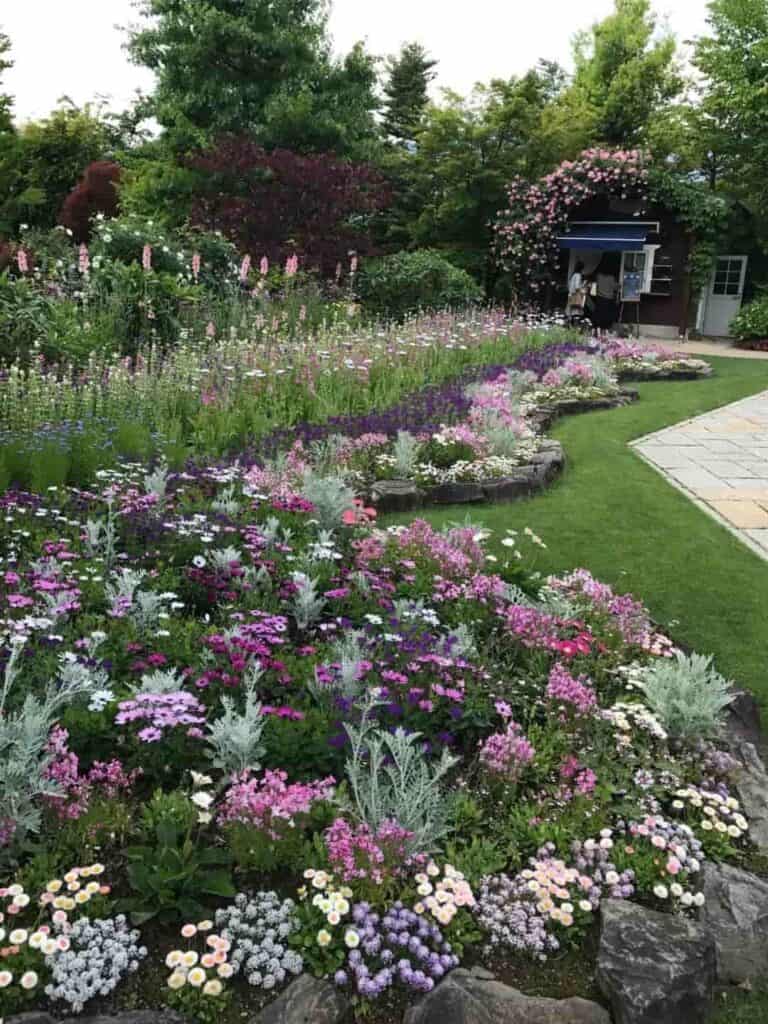
I love the idea of a lush, blooming garden. I do not love the idea of back-breaking labor, weeding until my hands are raw, or watering on a military-style schedule.
So, I set out to create something truly magical: a Martha Stewart-level flower garden that requires almost zero work from me.
I’m talking no weeding. No watering. And absolutely, positively, no deadheading (which is just a fancy, cruel word for “picking up tiny, dead plant confetti for hours”).
Sounds like a fantasy, right? Well, it’s not. I’ve cracked the code.
And today, I’m sharing all my secrets for building a stunning, low-maintenance garden that basically runs itself.
The Three Holy Commandments for Choosing “Zero-Work” Flowers

The Three Holy Commandments for Choosing “Zero-Work” Flowers
You can’t just wander into a garden center and pick whatever looks pretty.
That’s a trap that leads to a summer of servitude. Every plant in my garden has to pass three strict criteria.
Think of it as a very exclusive club where the only members are the tough, the independent, and the breathtakingly beautiful.
1. They Must Be Perennials.
This is non-negotiable. Annuals are the needy, high-maintenance friends of the plant world.
You have to buy them, plant them, and watch them die, every single year. Exhausting. Perennials, on the other hand, are the ride-or-die besties.
You plant them once, and they come back, bigger and better, every single spring. It’s the ultimate “set it and forget it” strategy.
2. They Must Be Drought-Resistant and Pest-Resistant.
I don’t water my garden. I’m not a firefighter, and my plants aren’t a burning building.
They need to be able to survive on rainfall alone. Furthermore, they must be able to stand their ground against the onslaught of local wildlife.
If a bunny, deer, or bug finds it delicious, it has no place here. My garden is a decorative fortress, not an all-you-can-eat salad bar.
3. They Must Be Cut Flowers.
What’s the point of having a beautiful garden if you can’t bring that beauty indoors?
Every plant I choose has to be able to be clipped and put in a vase.
It’s the ultimate ROI: a little effort outside gives me endless joy and decoration inside.
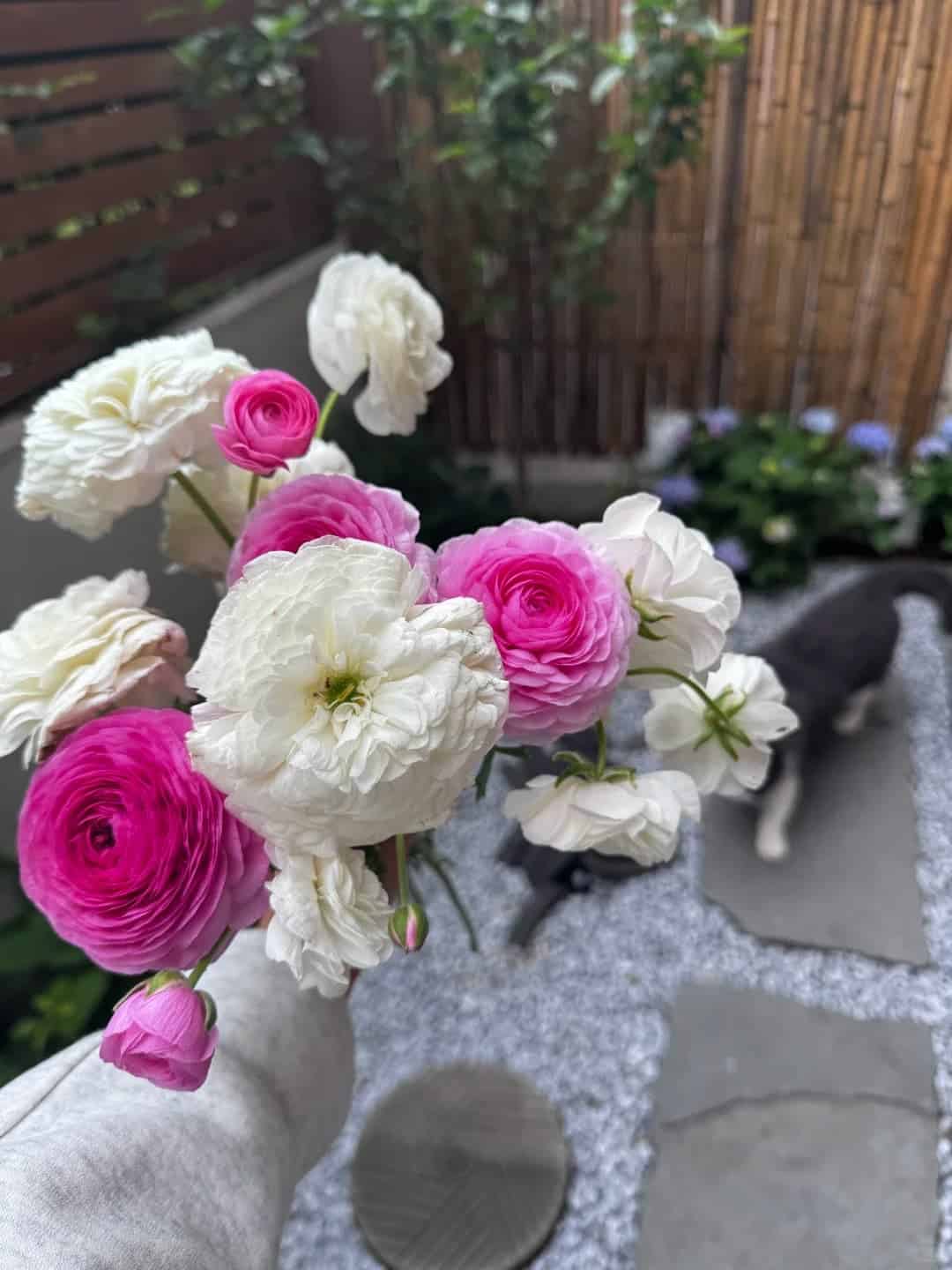
My All-Star Lineup of Zero-Maintenance Flowers
After years of research and trial and error (mostly error), here are the champions that have earned a permanent spot in my lazy garden.

1. Coneflower (Echinacea)
This is my personal favorite. I just planted some this year, so they’re still “babies,” but in 2-3 years, they’ll fill out beautifully.
They require no watering, bloom from mid-June all the way until the first frost, and have big, cheerful purple flowers that are perfect for cutting.
They are nearly indestructible. If you can’t keep one of these alive, I’m sorry, but you might be a plant serial killer.
2. Black-Eyed Susan
A very close second. These are perennials that come back with a vengeance every year.
They bloom from early July through frost, providing continuous color all summer long.
No deadheading, no watering, pests leave them alone, and they are ridiculously easy to cut and bring inside.
You literally plant it, walk away, and enjoy gorgeous flowers.
3. Coreopsis
I love this one for its marathon bloom period.
It goes from June straight through fall. It might require a tiny bit of deadheading, but it’s a small price to pay for months of vibrant, yellow flowers.
It’s a perennial, drought-tolerant, pest-resistant, and makes a great cut flower.
4. Shasta Daisy
Mine are already blooming in their first year! They’ll bloom through July, sometimes into August. They have that classic, beautiful sunburst look and are perfect for cutting. They’re drought and pest-resistant, but a word of warning: they spread aggressively. You will likely need to pull out extra plants each spring. (But don’t worry, I have a tip for that later).
5. Lilies (The Real Ones, Not Daylilies)
I’m talking about the fragrant, stunning lilies like Orange, White, and the gorgeous Stargazer.
These grow from bulbs that come back every year, they’re low-maintenance, drought-resistant, and make phenomenal, long-lasting cut flowers.
Notice I said not daylilies. We’ll get to those abominations later.
6. Blanket Flower
This plant is impossible to kill. It’s a perennial that grows about a foot tall and wide, thrives in any soil—clay, sand, you name it—and is ridiculously drought-resistant.
It blooms all summer with bold, fiery colors and asks for nothing but your admiration.
7. Lavender
Unkillable. Extremely fragrant. It’s the ultimate multi-tasker: you can use it for home fragrance, potpourri, or even medicinal uses. It requires no watering—treat it like a cactus.
I have both Spanish and English lavender, both less than a year old and thriving.
Pro Tip: If your lavender dies, it’s almost certainly because you watered it too much. It loves neglect.
8. Ornamental Grasses
If you live in a very dry climate, these are your best friends. They are the definition of zero-maintenance.
Drought-resistant, perennial, and unkillable. They add texture and movement to the garden without asking for a single thing in return.
9. Pin Cushion Flower
This one is a superstar for attracting butterflies—better than any other plant I have.
A crucial note: it needs part shade. Too much sun will fry it, which I learned the hard way.
I’m currently struggling to keep mine alive due to a placement error, so learn from my mistake!
10. Russian Sage
It’s like ornamental grass’s more glamorous cousin. It’s drought-tolerant, hardy, and produces beautiful, airy purple blooms for a long time.
It’s just as low-maintenance and adds a lovely, soft texture.
11. Phlox
A cottage garden staple! I inherited some from the previous homeowner and planted new ones.
They are perennials that bloom from July through frost, come in a million colors, and while they aren’t the best for cutting, they are visual powerhouses.
They thrive in both sun and shade.
12. Hostas
Do you have a shady spot? Plant a hosta. Just one. Because soon you’ll have twenty.
These things are extremely hardy—you’d have to actively try to kill one. The flowers are secondary; the gorgeous, varied leaves are the main attraction.
The best part? You can easily dig them up, split them in half, and replant them (or give them to friends). They’re the gift that keeps on giving.
How to Get a Free Garden: The Art of Plant Sharing

This is my favorite part. Almost every single flower I just mentioned can be divided.
That means you can literally build your entire garden for free.
Got a friend with a established garden? Ask them for a “baby” of their coneflower, or a chunk of their hosta.
In the gardening world, this is a normal and celebrated form of friendship. You can have a garden that costs you nothing but a little sweat equity.
What NOT to Plant: The High-Maintenance Nightmares
For every lazy-girl hero, there’s a villain. Avoid these at all costs unless you want a part-time job you didn’t apply for.
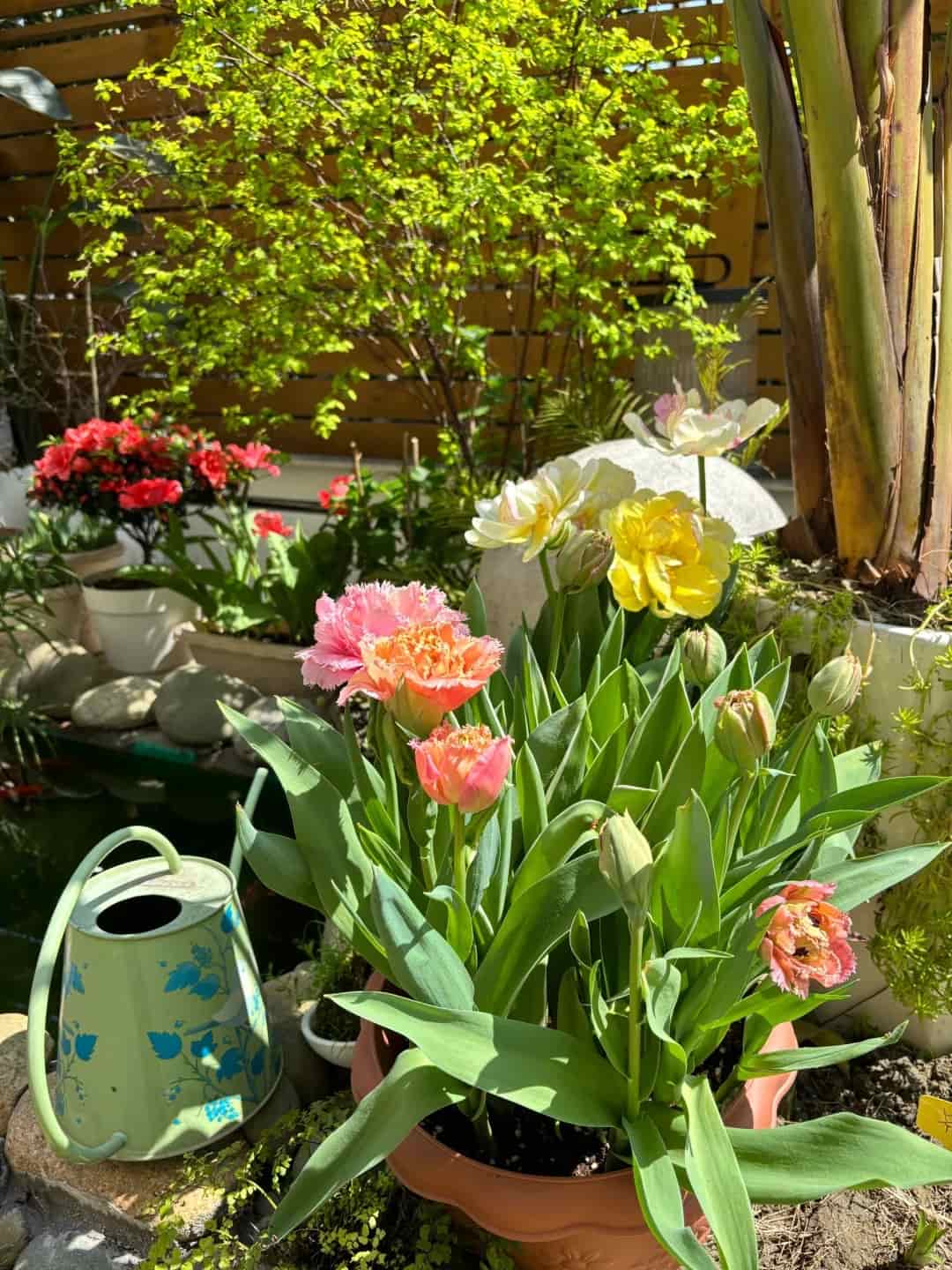
1. Lily of the Valley
I inherited this from the previous homeowner, and it’s my nemesis. It is incredibly invasive, spreading uncontrollably via underground runners and choking out anything in its path.
It blooms for maybe two weeks, and then you’re left with a sea of unattractive foliage. Dealing with it is like decluttering a hoarder’s house—it’s never-ending.
2. Buttercups, Mountain Bluet, and Irises
These are all invasive “spreaders.” They might look cute at first, but they will slowly conquer your garden, and removing them is a back-breaking task.
3. Daylilies
I hate them. There, I said it. Each bloom lasts exactly one day, which means you are constantly deadheading a floppy, dying mess. It’s too much maintenance for my lazy garden philosophy.
4. Peonies
They are beautiful and easy to grow, I’ll give them that. But they attract ants like you wouldn’t believe. You can’t bring them indoors without also bringing a colony of ants into your house. No thank you.
5. Foxglove
Okay, this one is stunning. It’s also highly, highly poisonous. I’m talking deadly. Stay away unless, you know, you want to kill your husband with an undetectable tea. (That’s a joke… mostly. It’s seriously poisonous).
Pro Tips for a Truly Lazy, Maintenance-Free Garden
1. The Ultimate Weed Control: Landscape Fabric
Forget cardboard or newspaper; it just breaks down and becomes a mess. I use a double layer of landscape fabric.
It prevents weeds from ever seeing the light of day. You lay it down before you plant, cut small X-shaped holes only where your plants are going, and you’re set for years. It works for new gardens and can be tucked into existing ones.
2. Mulch Like You Mean It
Mulch is the final, non-negotiable step. It locks in the landscape fabric, prevents any stray weeds, retains moisture (so you water even less), regulates soil temperature, and makes everything look finished and gorgeous.
You can get bags for about $3 each, or get a whole truckload delivered for around $25.
It’s the cheapest and most effective beauty treatment your garden will ever get.
Easy Edibles for the Lazy Gardener
Maybe you want a few things you can eat, too? I’ve got you.

1. The Heroic Herb Pot
My favorite method is one big, mixed herb pot. Get a large, tiered pot, fill it with soil, and plant a bunch of herbs together—cilantro, basil, oregano, thyme, rosemary, chives.
A big pot means less watering, and having them all in one spot is super convenient. Bonus: chives are perennials and will even come back in the pot!
2. Easy-Peasy Vegetables
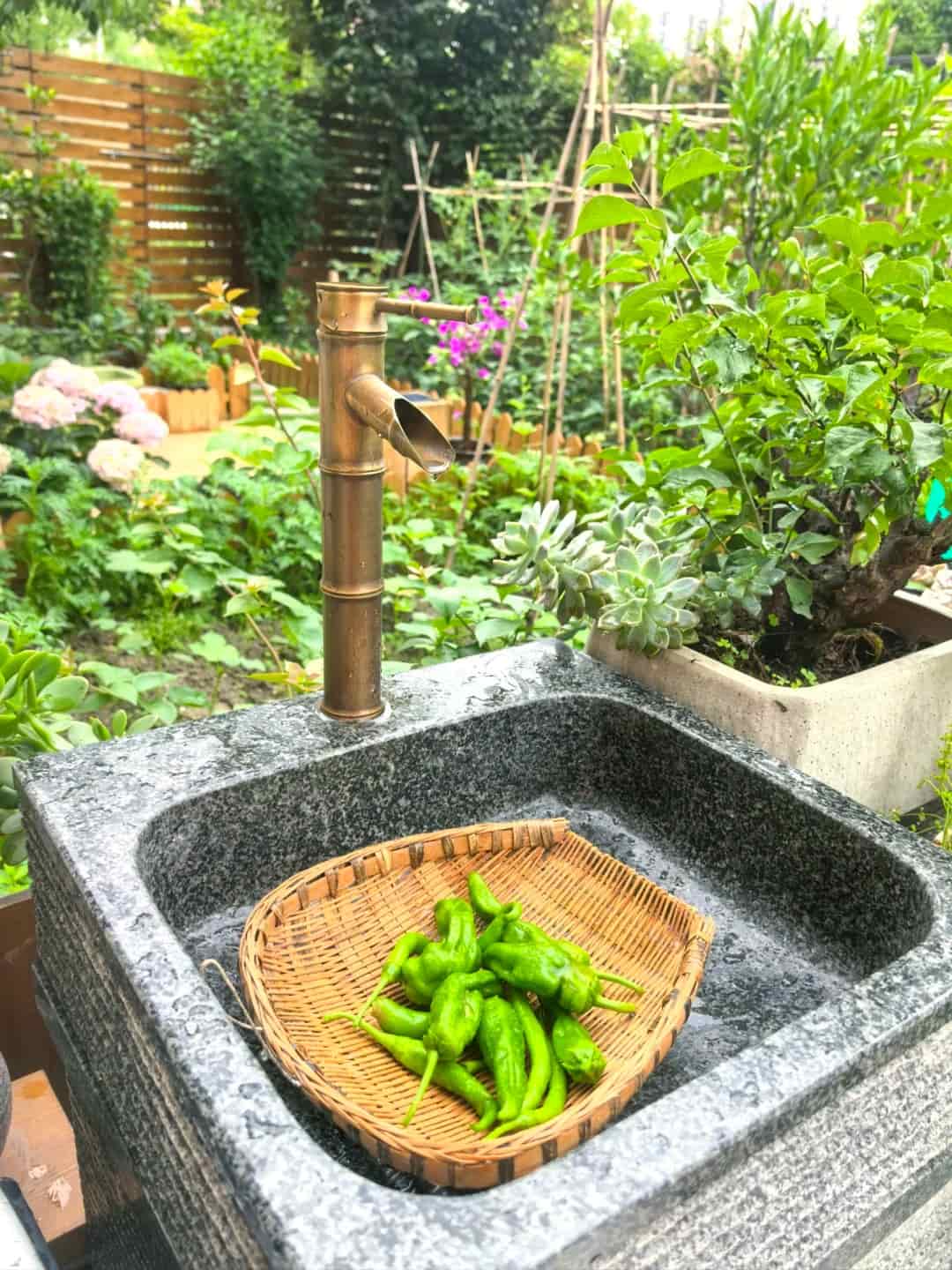
I’m planning a bigger veggie garden next year, but this year I’m keeping it simple with pots. Cherry tomatoes, zucchini, cucumbers, peppers, and lettuce are all surprisingly easy.
If I can do it, you absolutely can too.
Flower Pot & Container Hacks
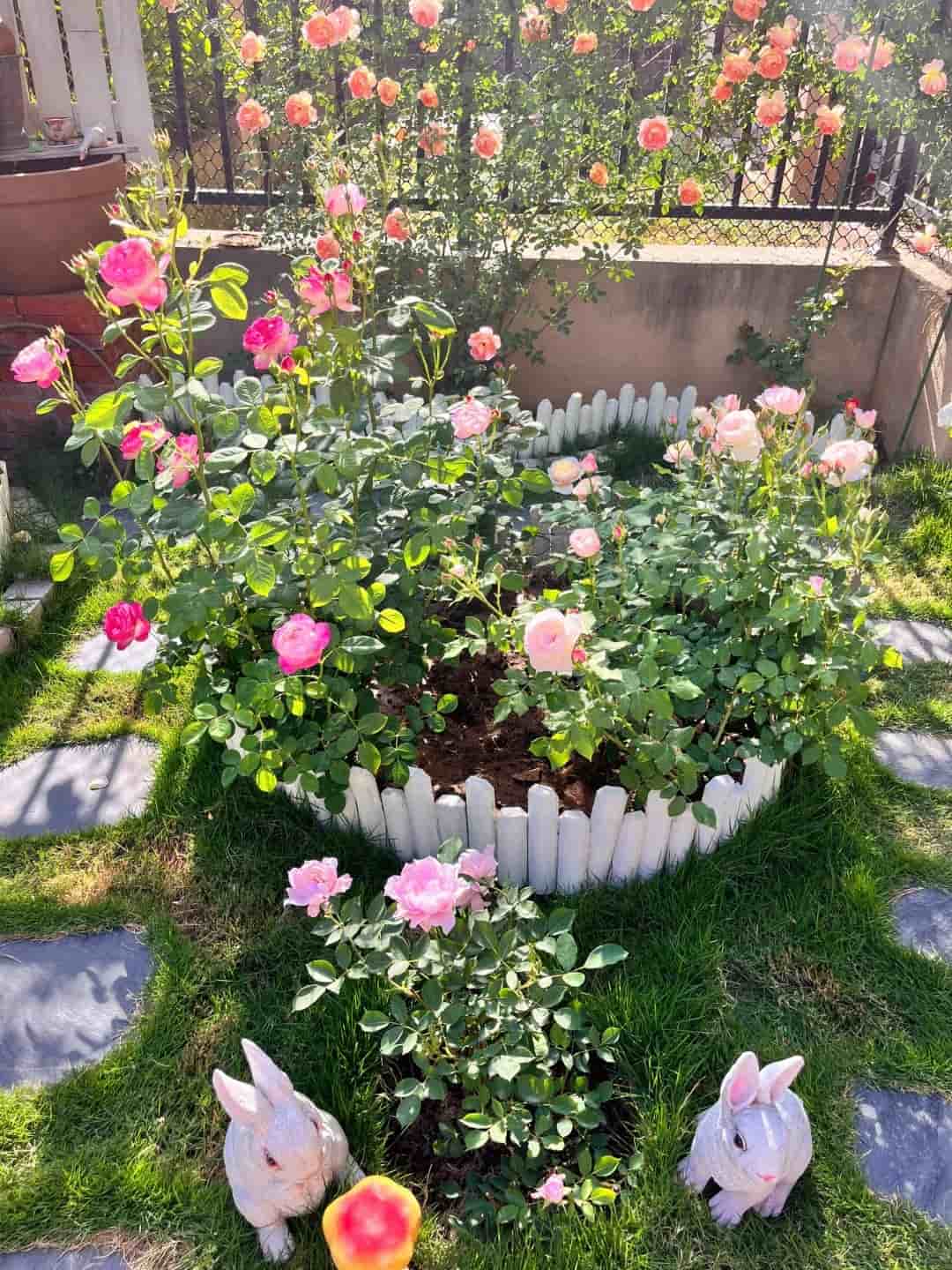
Buying individual annuals is expensive. My hack? Buy those big, pre-made, gorgeous flower pots from Costco or a garden center.
They’re often cheaper than assembling one yourself. Then, I take them home and transplant the whole thing into an even larger container with fresh soil and some drainage stones at the bottom.
More soil = less frequent watering. My large pots only need a drink once every two weeks.
The Lazy Girl’s Hanging Basket Watering Solution
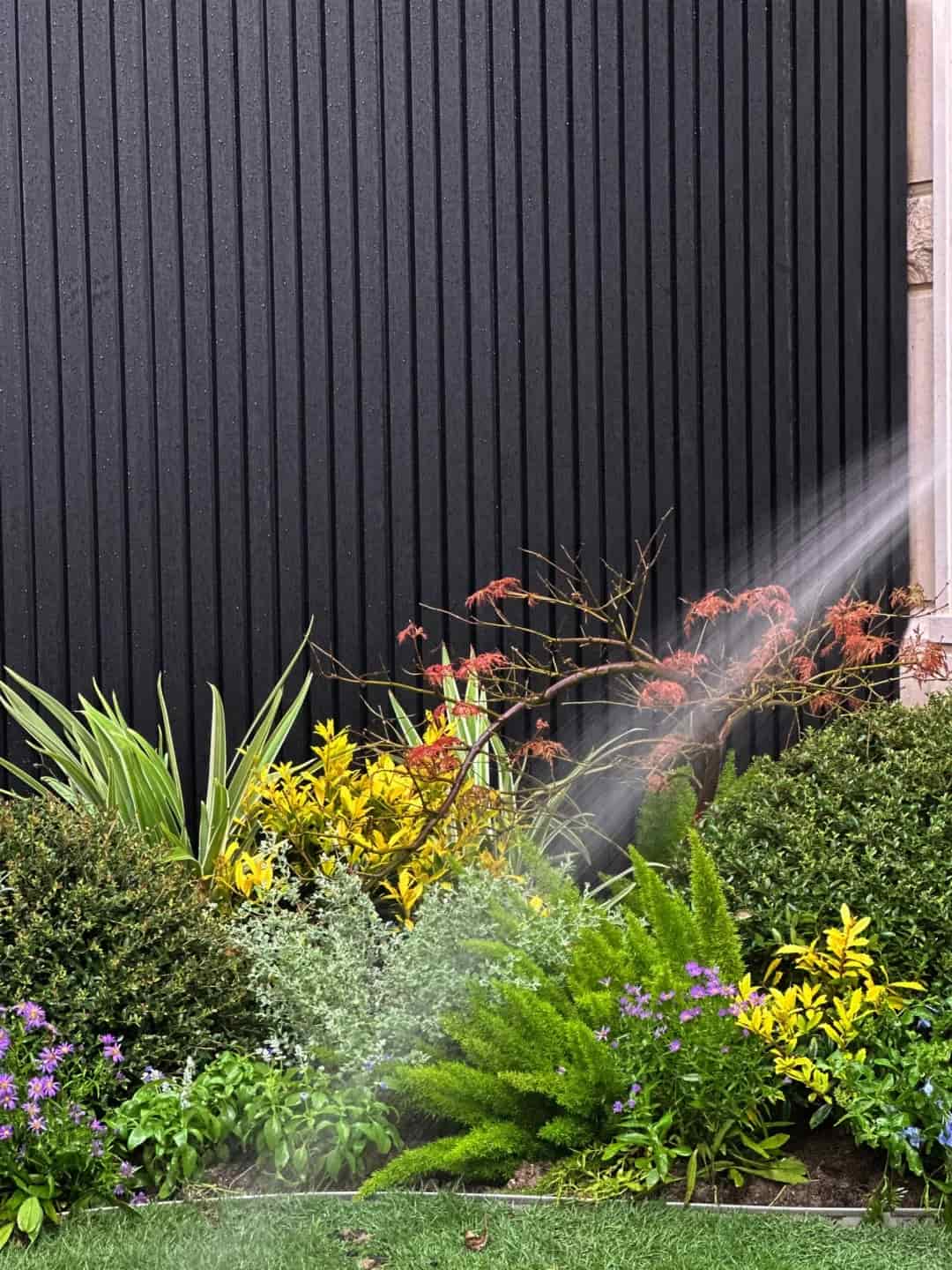
I have a lot of hanging baskets, and watering them was a chore.
My solution? A self-watering drip system. I thought it would be expensive, but I set the whole thing up for under $50 with supplies from Amazon.
I connected a series of hoses and tiny drip nozzles to my regular garden hose.
Now, I turn one spigot, and it waters all my hanging baskets at once. It’s the ultimate in lazy, efficient genius.
Let’s Be Friends!
So, there you have it. My complete guide to achieving a gorgeous, zero-work garden. I hope you found it helpful! I’d love to hear from you—what are your favorite “Lazy Girl Homemaking Hacks”? Baking, cooking, cleaning, organizing, decorating?