On my little homestead, I’ve dedicated a sun-drenched, prime real estate section I lovingly call “The Spiky Suite.”
It’s here, among the bees and the hummingbirds, that I’ve learned dragonfruit are the ultimate contradiction: astonishingly easy plants if you set them up correctly, but tragically unforgiving if you mess up the early basics.
Their growth cycle is measured in years, not months. A mistake in Year 1 isn’t a “whoops, let’s fix it next season” moment.
It’s a “see you in 2026, maybe” setback. It’s horticultural delayed gratification at its most brutal.
So, after playing the role of both diligent gardener and chaotic experimenter, I’ve compiled the five most common, heart-breaking, and totally avoidable dragonfruit-growing mistakes.
I’ve made them all, so you don’t have to. As a special bonus, I’ve enlisted the wisdom of Richard from Grafting Dragonfruit to hit us with a sixth, expert-level blunder that’s sneakier than a cat burglar in a wool sock.
Let’s stop these mistakes before they stop your dragonfruit dreams.
Mistake #1: The “Snug Fit” Delusion
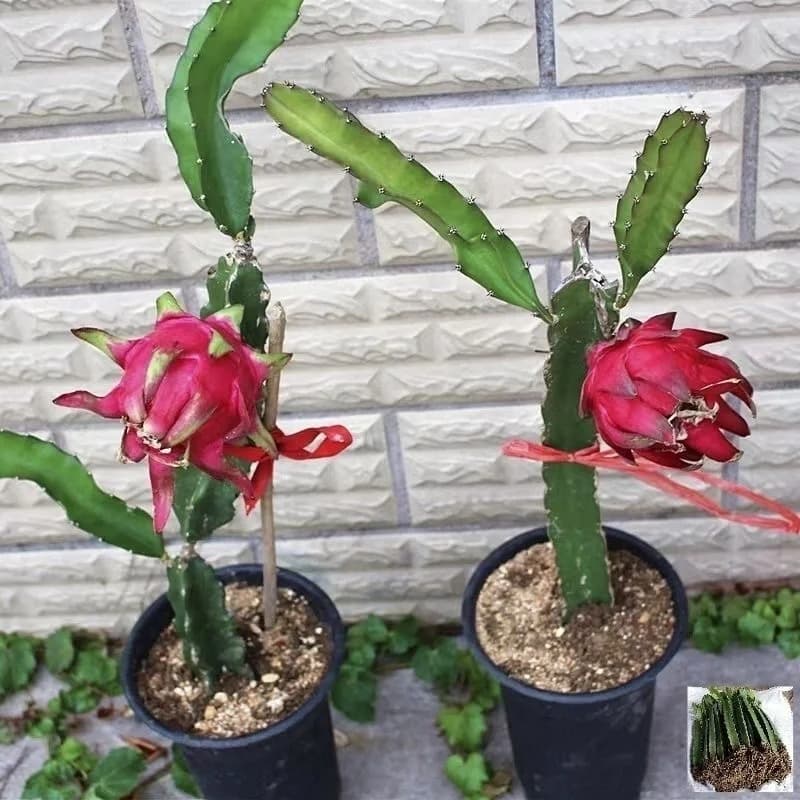
If I had a nickel for every time I saw a gorgeous, mature dragonfruit plant on social media looking miserably crammed into a pot better suited for a petunia, I’d have enough money to buy a very large truckload of 25-gallon containers.
This is Mistake #1 for a reason. It’s the foundation of all future pain.
We are not housing a petite desert glob here. We are hosting a tropical climbing cactus with the architectural ambitions of a medium-sized vine.
Think of it less like planting a shrub and more like adopting a slow-motion, photosynthetic octopus that wants to expand in all directions.
Here’s the cold, hard truth your local garden center won’t tell you: A dragonfruit plant is a 3-to-6-year commitment before it truly hits its fruiting stride.
You are building a perennial fruit factory. You wouldn’t build a factory on a postage stamp, would you?
- The Minimum: 20 gallons. That’s the bare minimum, the studio apartment of the dragonfruit world. I now go for 25 gallons or more as my standard. Yes, your back will hate me on potting day. Your plant will love you for years.
- Shape Matters: Taller pots are often better than wide, shallow bowls. It encourages a deep, strong root system and gives you vertical space for the roots before you even add a trellis.
- Material World: Terracotta breathes and helps prevent overwatering but dries out faster and weighs approximately as much as a small moon. Plastic is lighter and retains moisture better—just make sure it has excellent drainage holes. I’ve been known to take a drill to the sides of mine near the bottom for extra insurance.
- Why Go Big or Go Home?
- No Repotting Trauma: Imagine trying to repot a six-year-old, thorn-covered beast. It’s not a gardening task; it’s a medieval quest. One big pot from the start means you never have to do it.
- Trellis Stability: Your trellis needs to be permanent and anchored in the pot. A small pot can’t handle the top-heavy weight of a mature plant on a 5-foot post. It’ll blow over in the first stiff breeze, resulting in a tragedy I call “Snapped Stem Syndrome.”
- Root & Soil Buffer: More soil volume = more organic matter, more nutrients, more room for roots to explore. It also acts as a giant moisture buffer, which leads us perfectly to…
Mistake #2: Drowning Your Spiky Friend
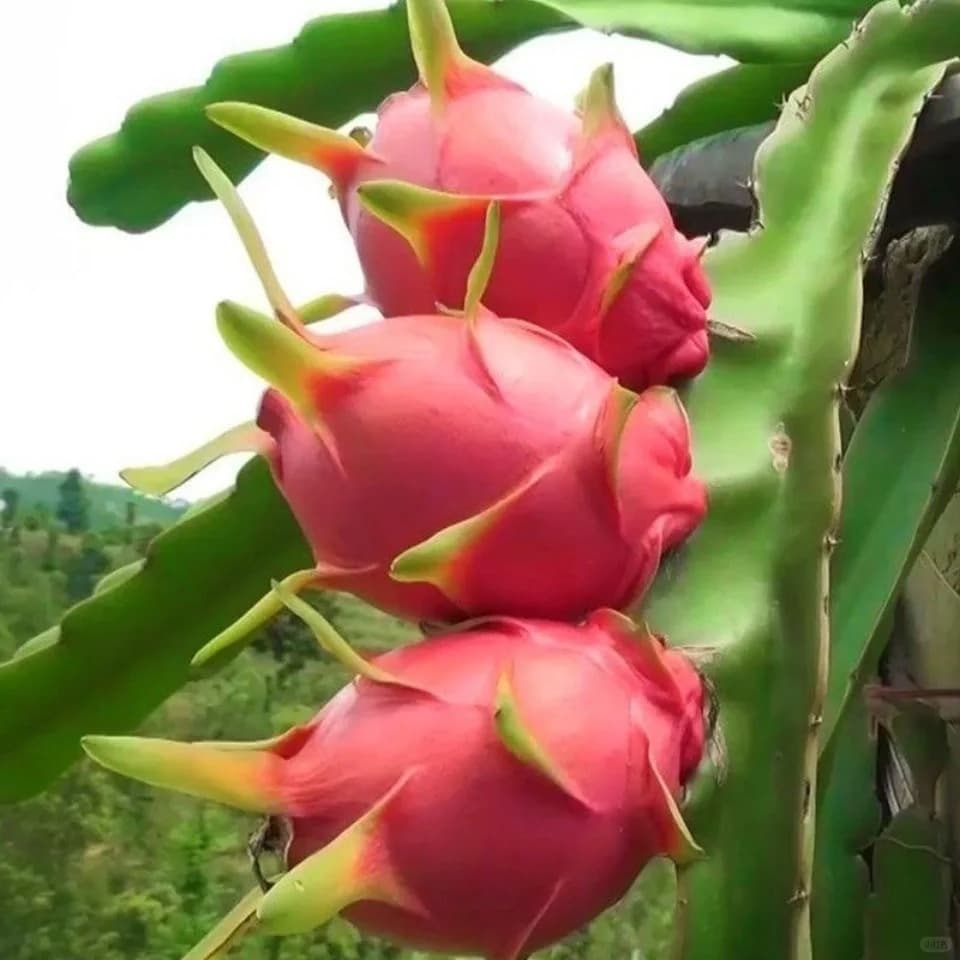
This is where our brains short-circuit. “Cactus” = “desert” = “ignore it.”
Right? WRONG. This is the siren song that leads to more dead dragonfruit cuttings than any other.
The Hylocereus is a tropical jungle cactus. It grows in the humid, nutrient-rich detritus of trees, where rainfall is frequent but drainage is instant.
Its water needs are closer to a tomato plant than to a barrel cactus sitting in Arizona.
- The Big Pot Savior: See how this works? That massive 25-gallon pot from Mistake #1 is your first line of defense. The top few inches can be dry (which fools you into thinking it’s thirsty), while deep down where the roots are, it’s still perfectly moist.
- The Golden Rule: About one inch of water per week, adjusted for heat and rain. Don’t just sprinkle the surface. Soak it deeply, then let it approach dryness before doing it again. I stick my finger way down into the soil. If it’s cool and slightly damp, I walk away.
- The Root of the Problem: When you plant a cutting, remember: roots will form from the buried stem. You don’t have a deep taproot system at first. Watering too often keeps the base soggy, and soggy + organic matter = root rot. The first sign is often a healthy-looking top with a stem piece at the base that just… slips off. Mushy. Brown. A total loss.
- The Cost: This isn’t just about losing a $10 cutting. It’s about losing 6-12 months of growth time. The emotional toll of watching a plant you’ve nurtured just dissolve from the bottom up is real. Trust me. I’ve held funerals.
Mistake #3: Being a Permissive Plant Parent
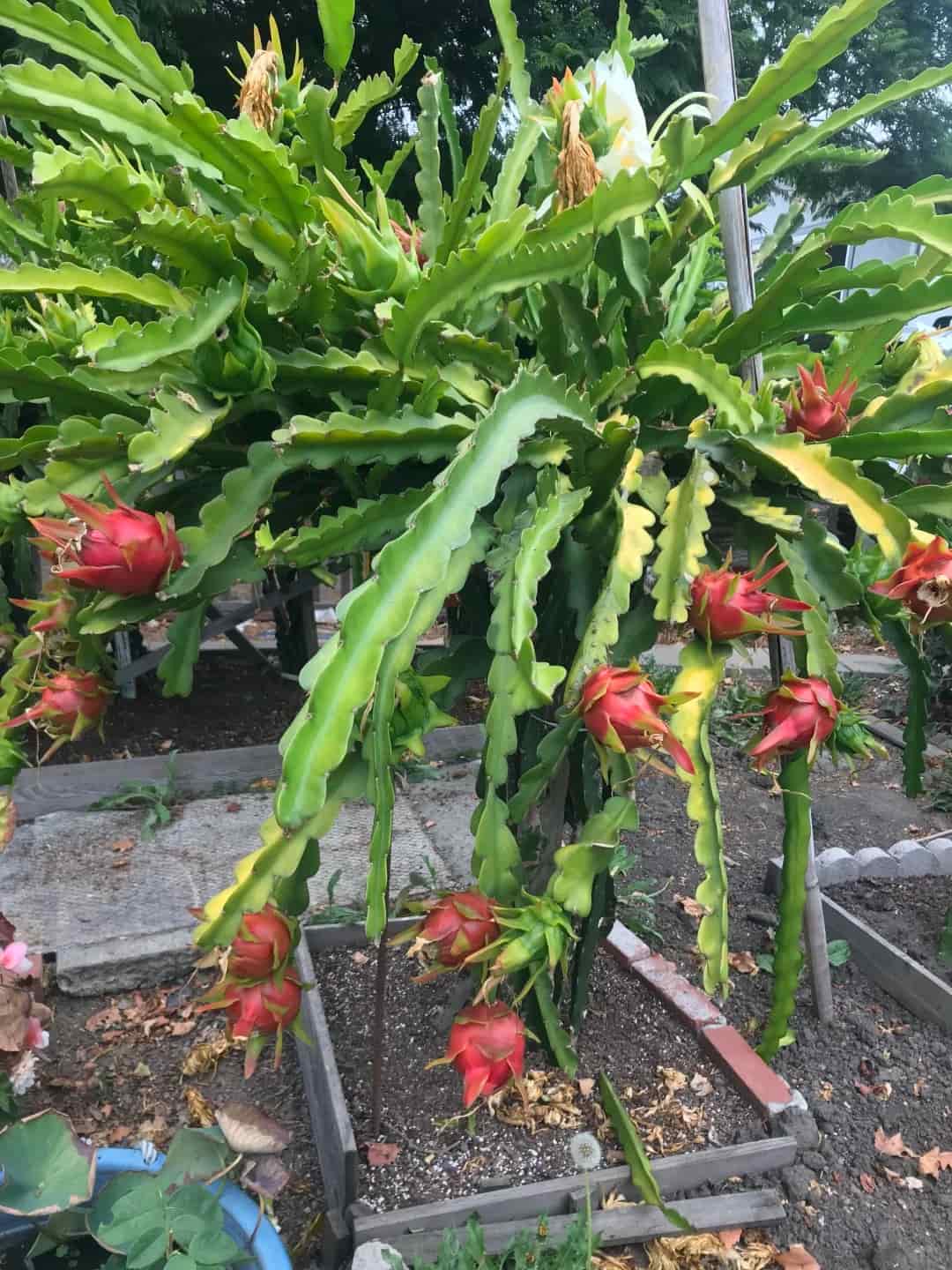
If Mistakes 1 and 2 are about setup, this is about management. And it’s the most visually painful, “oh honey, no” mistake to witness.
It’s the dragonfruit equivalent of letting a toddler eat nothing but candy and never learn to tie its shoes.
I learned this after transplanting a beautiful, vigorous cutting. It shot out new growth! I was thrilled! I left it alone! This was my error. The new growth was pointing downward and at a weird angle.
Dragonfruit have a hidden directive: each thorn cluster is a budding node. The tip of the stem (the apical meristem, for the fancy) tells the plant which direction is “up.”
If the tip is pointing down or sideways, the plant gets confused. It thinks, “Well, this can’t be the main leader anymore,” and it triggers a frenzy of side-shoots from every single node, trying to find a new upward leader.
You get a messy, congested, energy-diffused bush instead of a strong, climbing vine.
- You Must Be the Boss: Prune those excess side shoots mercilessly when they are small (like, 1-2 inches). Choose the strongest, best-oriented shoot to be your main leader and remove its competitors.
- Training is Key: Dragonfruit stems are incredibly flexible when young. Gently bend and tie your chosen leader(s) to your trellis, pointing straight up. Use soft plant tape or cloth. Don’t wait until it’s thick and woody, or you’ll snap it.
- The Payoff: A properly trained stem pours all its energy into vertical growth. It gets taller, faster. Once it reaches the top of your trellis, then you let it branch out (or “tip” it—see Mistake #4). This leads to a stronger structure and earlier fruit production. The cuttings you prune off? Root them! You’ve just made free plants to gift, sell, or expand your Spiky Suite.
Mistake #4: Letting the Teenager Run the House
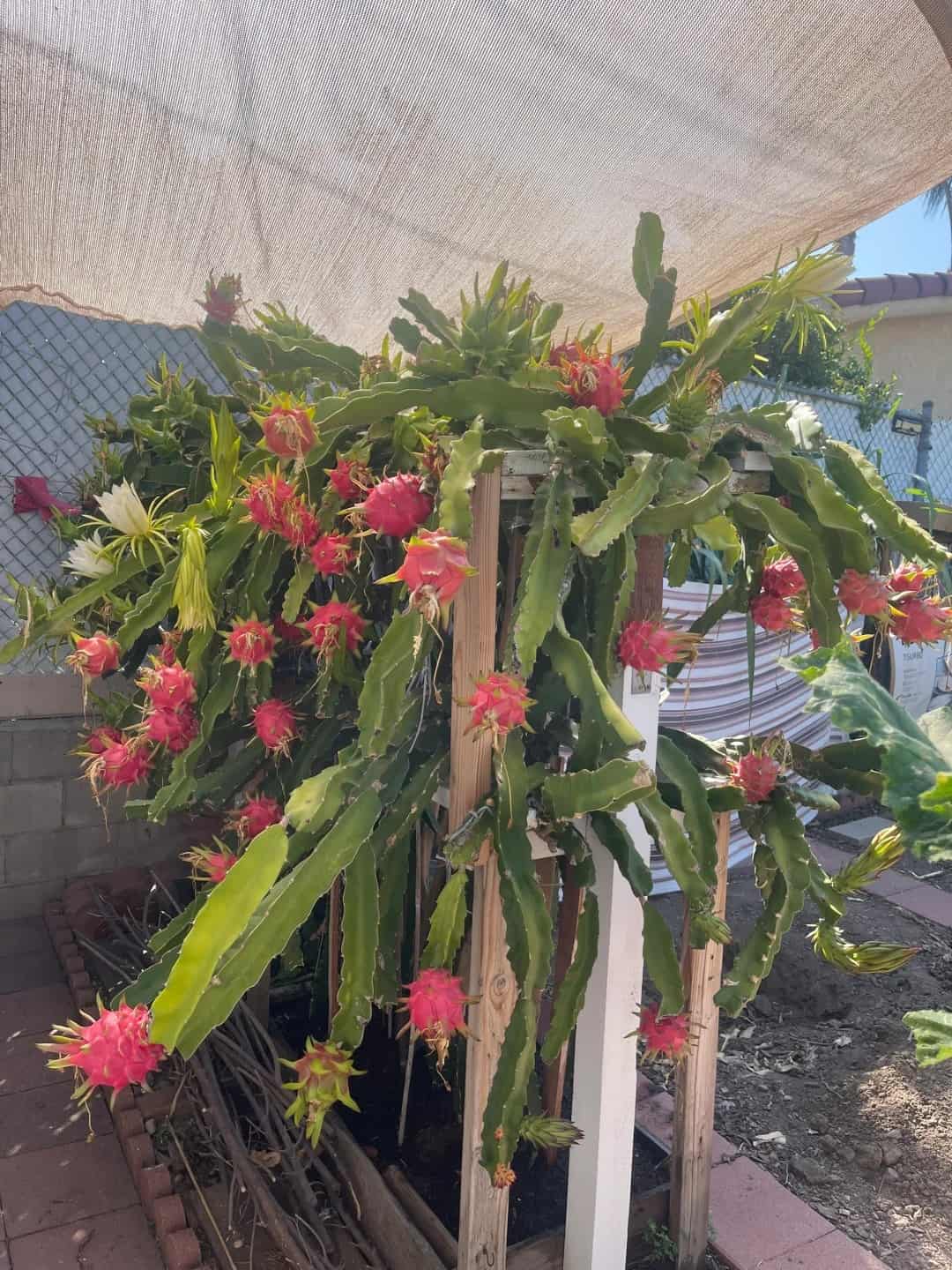
This is the classic gardener’s lament: “It’s huge! It’s green! It’s growing like a weed! WHERE ARE THE FLOWERS?”
Your plant is stuck in a vegetative puberty, all gangly limbs and no responsibility. It’s happy just being a leafy beast.
You need to induce a little stress to trigger its reproductive phase. Enter: The Tipping Technique.
This is different from general pruning. Once your main stem is over your trellis and has some nice long, mature branches hanging down, you can “tip” them.
- How to Tip: Simply take your sterilized shears and cut off about one inch from the tip of selected branches. Do this a few months before your typical flowering season.
- Why It Works: You’ve removed the apical dominance. The plant panics slightly (“My growing tip is gone!”) and redirects its energy from pure growth to reproduction. Within 1-2 months, you should see flower buds forming at the nodes just behind your cut.
- Fertilizer isn’t Magic: Bloom boosters (high in phosphorus and potassium) are like vitamins for a pregnant mother—they support the process, but they don’t cause the pregnancy. Tipping is what flips the switch.
Mistake #5: The Lonely Heart Club Pot
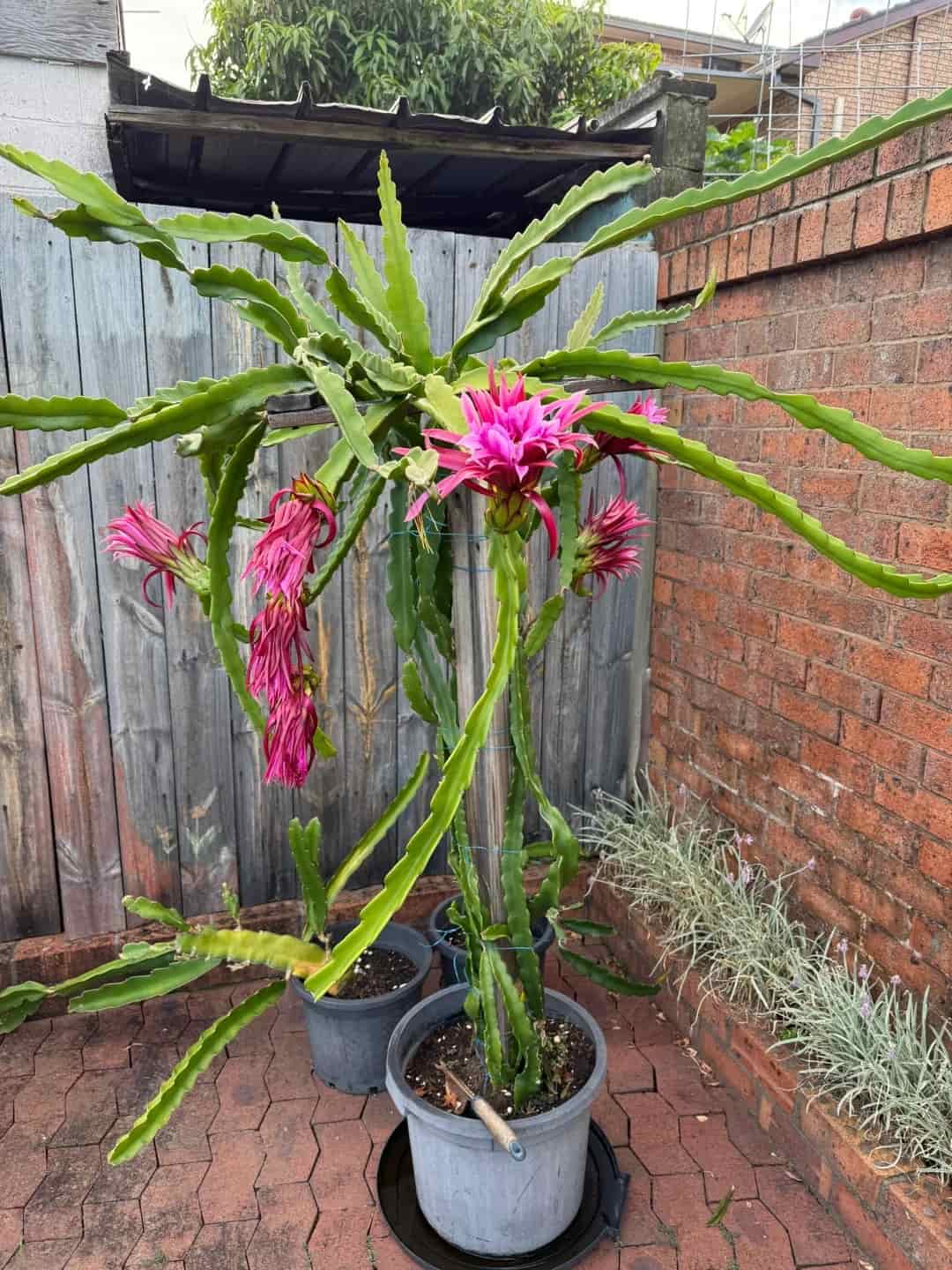
You’ve bought the 25-gallon mansion. You’ve built the sturdy trellis. And then you plop… one single cutting in the middle of it all. This is like building a four-bedroom house and living alone in the broom closet.
You are wasting space, soil, and time. Dragonfruit are not heavy root competitors like annual vegetables.
Their real estate is vertical.
- The Gold Standard: Plant four cuttings per pot. Arrange them evenly around the base of a central post trellis. This gives you one primary stem to train up each side of the post.
- The ROI Argument: Same pot, same soil, same trellis, four times the production potential. It’s simple math for a better harvest.
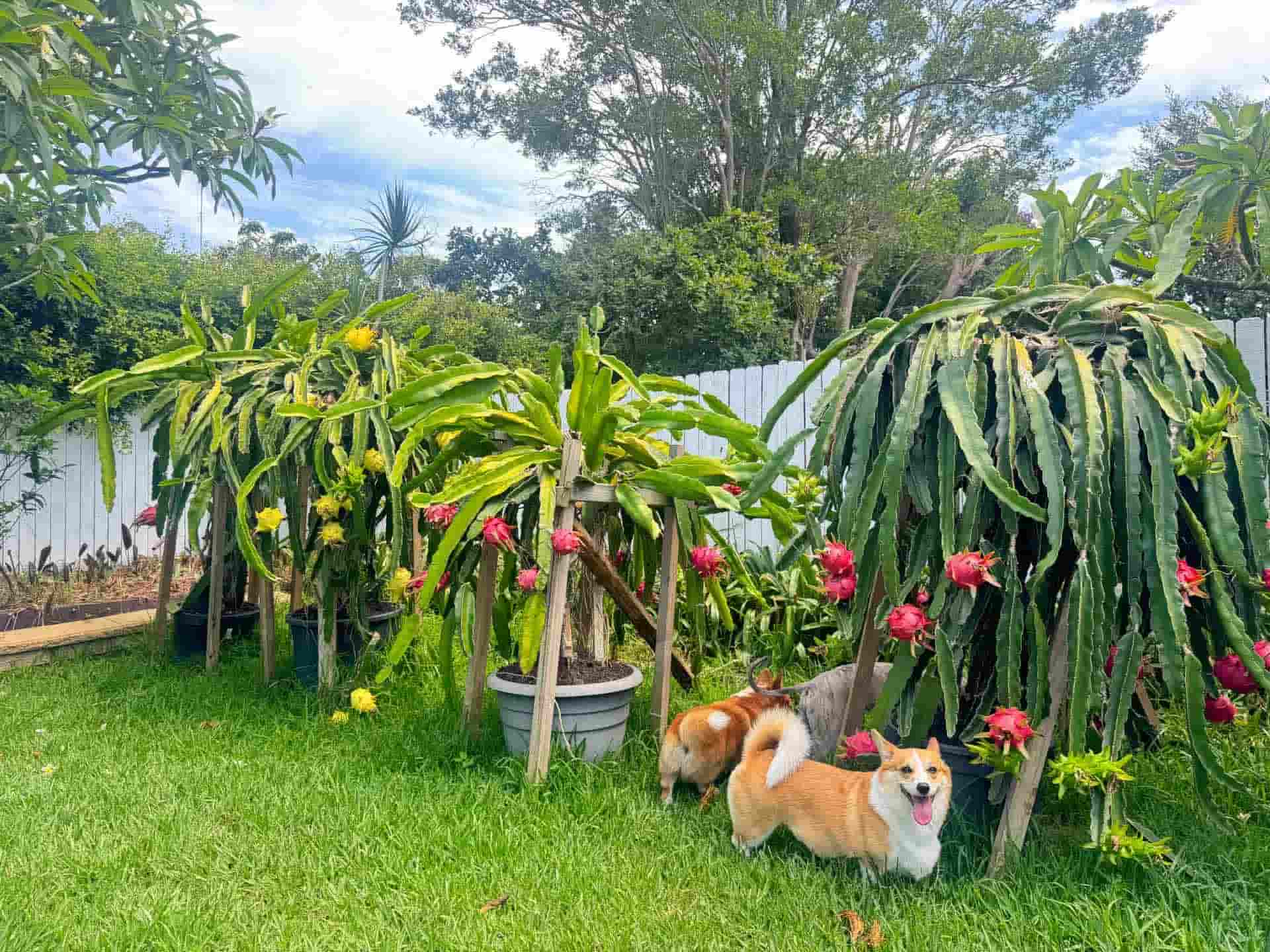
- Variety Management: Keep all cuttings in one pot to the same variety (e.g., all ‘Vietnamese Jaina,’ all ‘American Beauty’). This ensures even growth and flowering. Want multiple varieties? Use multiple pots! I have a whole pot dedicated to ‘Ecuador Palora,’ the yellow-skinned, white-fleshed variety that tastes like a sublime cross between a kiwi and honeydew. It’s worth its own real estate.
Bonus Mistake from the Expert: Ignoring Cactus Rust
I had the chance to bend the ear of Richard, whose YouTube channel Grafting Dragonfruit is a masterclass in clarity and expertise.
I asked him for the one mistake he sees savvy growers still miss. His answer was immediate and specific: Cactus Rust.
“It’s a winter disease,” Richard explains. “High humidity, fog, morning dew—it spreads fast and can transfer from plant to plant on your hands or tools.”
What is it? A fungal-like pathogen that shows up as small orange dots or half-moon shapes on your stems. If left unchecked, it progresses to blistering, black spots, and can rot the flesh.
Richard’s Step-by-Step Treatment Plan:
- First Response (Mild Cases): Mix a 50/50 solution of 3% hydrogen peroxide and water. Spray it on the affected areas at sundown. “It’s a great first defense,” he says.
- Organic Escalation: If the peroxide doesn’t halt it, Richard recommends Organicide, an organic ready-to-use spray. Follow the label (typically ~3 tsp/gal).
- The Big Guns (Severe Cases): For advanced blistering and spread, “Copper fungicide is your best bet. It’s not organic, but it’s very effective.” Apply weekly, monitoring progress.
Pro Application Tip from Richard: Always apply any treatment at sundown or in early morning. Applying in direct sun can cause burns on your plant’s skin, adding insult to injury.
Closing Thoughts
Growing dragonfruit teaches you patience. It teaches you to look at the long game.
A setback isn’t a failure; it’s just a plot point in a very long, very rewarding story.
Remember, you’re not just growing a fruit. You’re growing a living sculpture, a nighttime-blooming wonder (those flowers are spectacular!), and your own personal treasure that ripens on the vine. Avoid these mistakes, and you’ll save yourself years of learning the hard way.