The potato is the ultimate comfort food. It’s the fluffy, buttery, crispy, salty foundation of culinary joy.
And growing your own? That’s like printing your own currency in the land of carbs.
For years, I’ve planted my potatoes the way my grandpa did—in a trench, like a law-abiding citizen of the garden.
But the internet, that glorious hive of contradictory wisdom, got me wondering.
Was I a gardening square? Were there better, easier, sexier ways to coax these tubers from the earth?
So, I did what any slightly unhinged gardening enthusiast would do. I turned my backyard into a potato penitentiary, with seven different methods acting as cells, all holding their starchy inmates.
My mission: to answer the age-old question, “Is there a best way to plant potatoes?” This is the tale of triumph, tragedy, and a truly impressive amount of dirt under my fingernails.
The Line-Up: Seven Suspects in the Case of the Missing Yield
I divided my methods into two gangs: the Container Crew and the In-Ground Mafia.
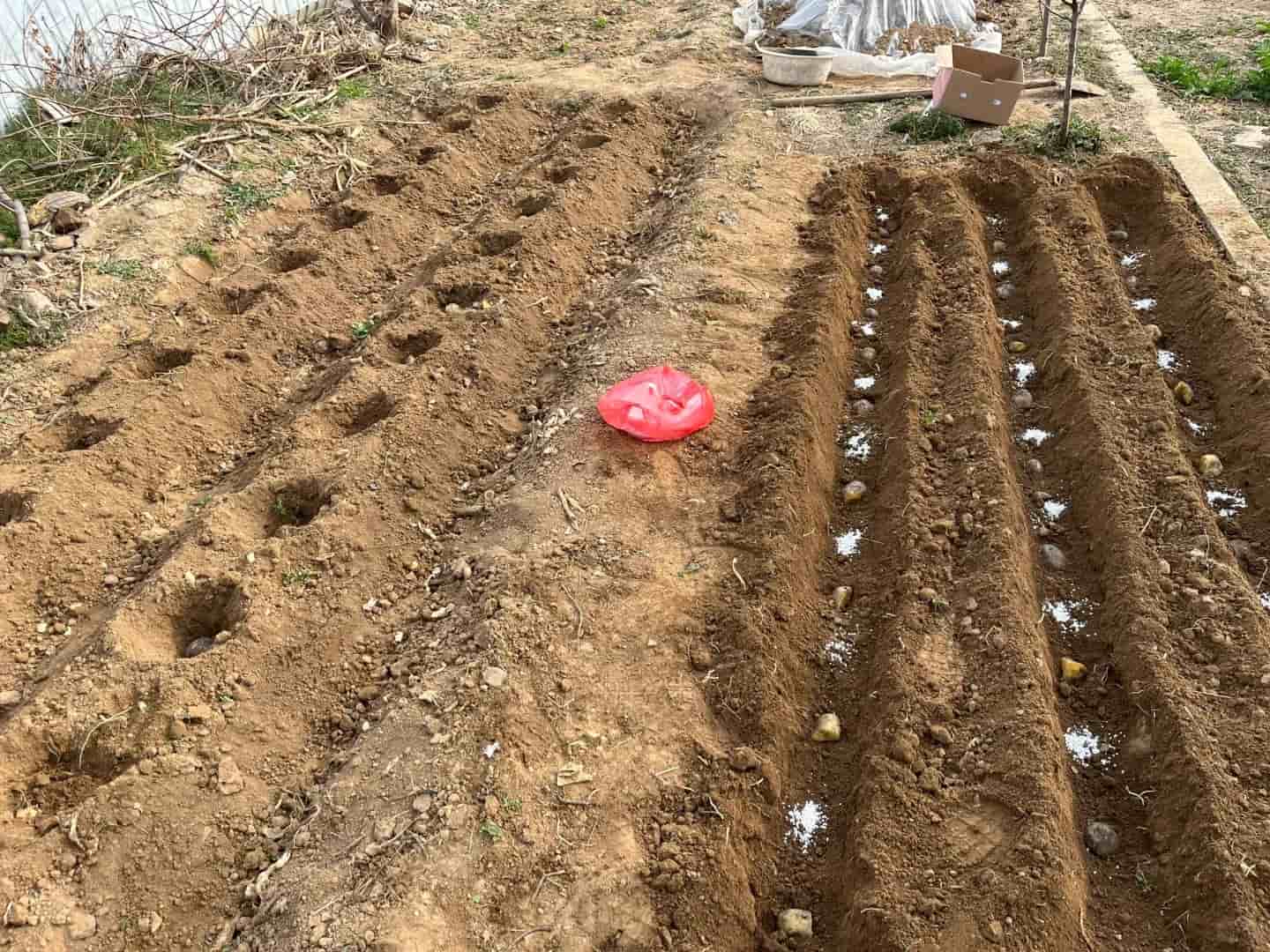
The Container Crew:
- The 5-Gallon Bucket: One seed potato, ensconced in soil. My critical, and as it turns out, catastrophic error? I did not drill drainage holes. In my defense, I was optimistic about my watering precision. (Spoiler: I was not precise. I was a water-wielding menace.)
- The Grow Bag: The trendy choice. Three seed potatoes in a porous, breathable fabric bag promising perfect drainage and easy harvests. It looked professional. It felt professional. I felt professional holding it.
The In-Ground Mafia:
- The Classic Trench (The Control): The old faithful. Five potatoes, buried 6-8 inches deep in a tidy row, 12 inches apart. This was the benchmark, the potato equivalent of plain oatmeal.
- The Deep Dive: One potato, planted a full 12 inches deep. The theory? More room for tubers to form along the buried stem. This potato was going on a spelunking expedition.
- The Shallow Shuffle: One potato, planted 6 inches deep. The direct competitor to Mr. Deep Dive.
- The Surgical Strike: One potato, cut bravely in half, each piece planted 6 inches deep. Could I double my money? This was my Wall Street bet.
- The Ruth Stout Method (The Rebel): No digging. Potatoes just plopped on the soil surface and smothered in a foot of straw. I’d had luck with this before! It promised no weeding, no digging, just lazy, bountiful harvests. What could go wrong?
Important Caveats
Before we continue, a confession. This was not a sterile, lab-coat-worthy study. This was a gardening experiment.
- The Potatoes: I didn’t use the same variety for every method. I used what I had, but I made sure comparisons (like Deep vs. Shallow) were fair with identical spuds.
- The Gardener (Me): I am flawed. Some plots were flooded by apocalyptic spring rains. Others were left parched and forgotten when I became distracted by, I believe, a very compelling ladybug. This wasn’t negligence; it was authenticity.
- The Goal: Not to find a perfect, controlled-result, but to see what works best in the messy, beautiful chaos of a real backyard.
Week 3: The Great Escape (Attempts)
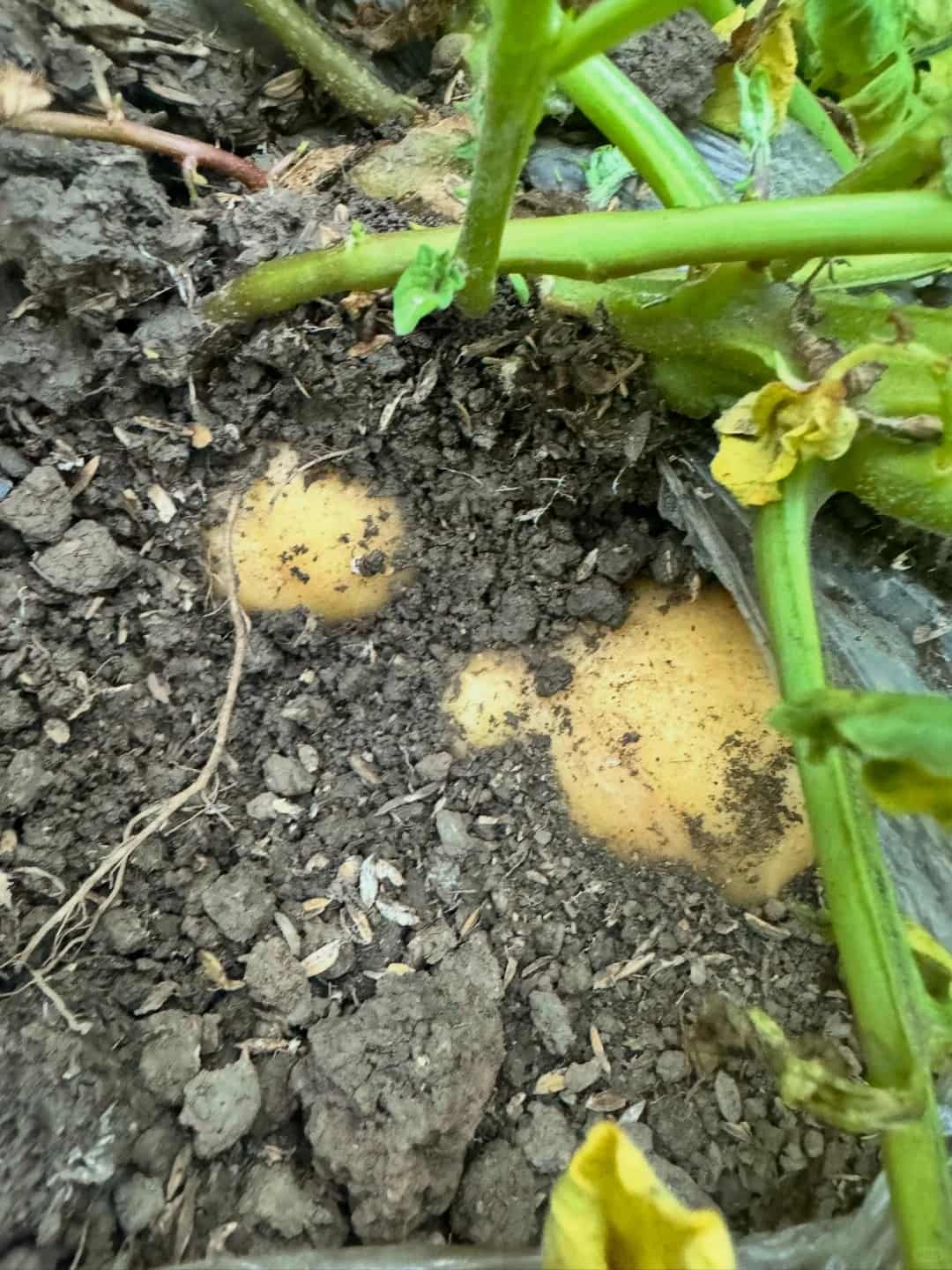
Three weeks in, and green shoots were popping up like periscopes! The excitement was real. I did a daily inspection like a warden.
- Classic Trench Gang: All five inmates were present and accounted for, standing at attention in a perfect row. Good, solid, dependable growth.
- Shallow & Surgical Crew (6-inch & Cut): These guys were the overachievers! They emerged first and shot up taller than the trenched potatoes. The cut potato, especially, seemed to be saying, “You cut me in half? I’LL SHOW YOU DOUBLE THE VIGOR!”
- Deep Dive Inmate: Took its sweet time emerging. When it did, it looked healthy, but it had clearly spent those extra weeks tunneling up from the depths, probably muttering about the lack of elevator service.
- The Ruth Stout Rebel Patch: Nothing. Nada. Zilch. A blanket of straw, quietly judging me. After a panic-dig, I found them! Eyes were sprouting… but also covered in little scratches. The local vole or mouse community had apparently found my straw buffet and left bad Yelp reviews on my potatoes. Growth was glacially slow.
- Grow Bag Trio: Two of three sprouted. The third was a late bloomer, discovered after I nearly gave it up for dead. Pro-Tip I Learned Mid-Crisis: Roll down the sides of your grow bags! More sunlight on the soil = warmer, happier potatoes.
- The 5-Gallon Bucket of Regret: The soil was a soggy, cold swamp. I had to physically lift and tip the bucket to pour out standing water. One pathetic, pale sprout finally peeked over the brim, looking like it had just survived a shipwreck.
Early Leader: The cut potatoes. Lagging Hard: Ruth Stout and the Waterlogged Bucket of Sadness.
Mid-Season: Personality Traits Emerge
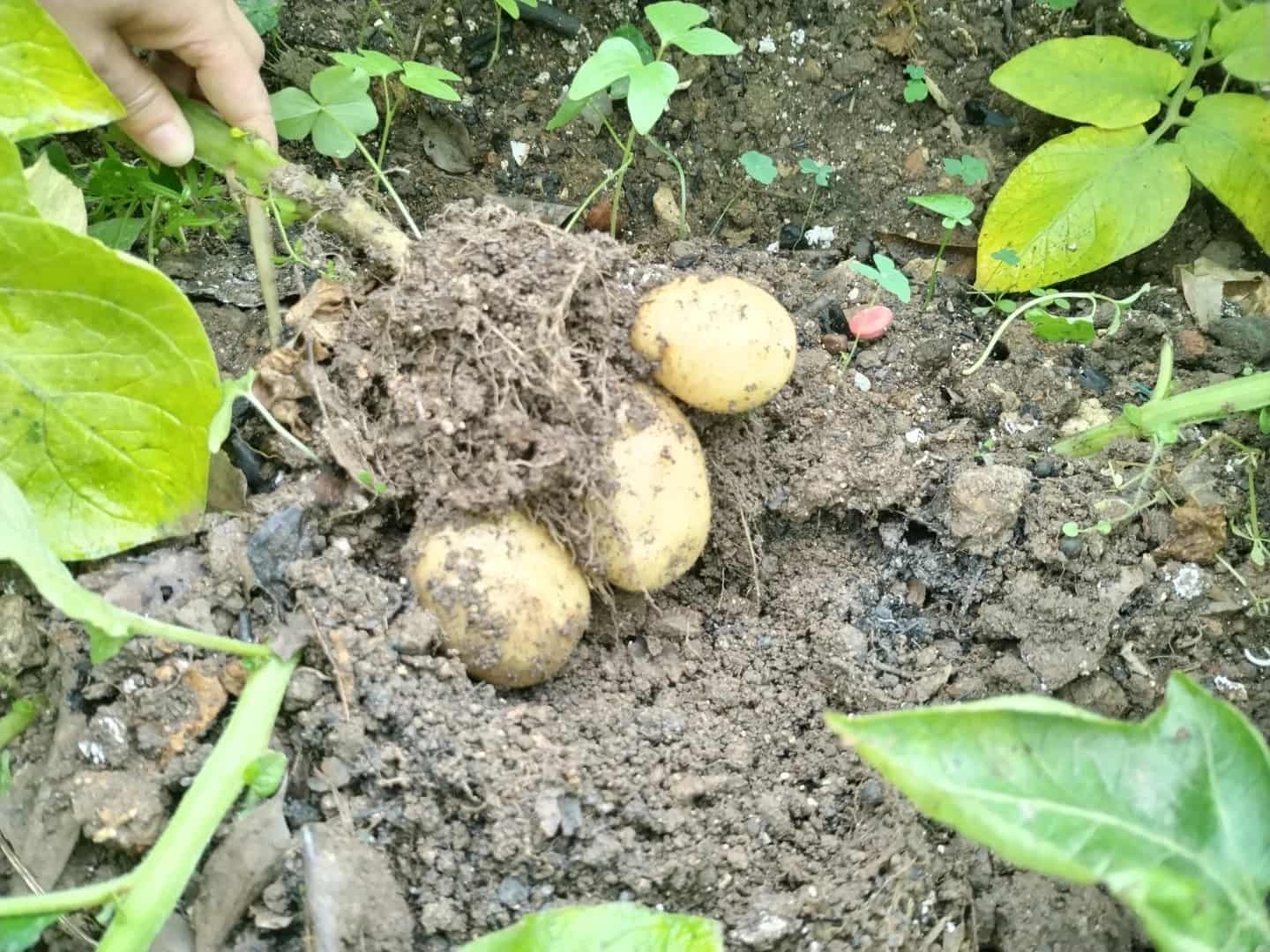
By mid-spring, the plants had distinct personalities.
- Trenched Row: The reliable middle managers. Lush, green, bushy, but a bit shorter than the others. Not flashy, but clearly doing the work.
- Shallow & Cut Plants: The tall, lanky hipsters. They had more textured, frilly leaves. They were definitely the ones in the garden telling the others about heirloom varieties.
- Deep Dive Plant: Shorter and stockier. It had used its energy getting to the surface, like a weightlifter.
- Containers: The grow bags were… fine. The bucket was a tragedy in a cheap plastic pot. They were noticeably behind the in-ground plants, like kids who showed up to the test without a pencil.
- Ruth Stout Patch: A patchy, weedy mess. Some plants finally emerged, but they were uneven and anemic. Upon investigation, I found a civilization of pill bugs thriving in the moist straw, likely nibbling on my precious sprouts. My “low-effort” method was becoming a high-stress pest hotel.
Early May: The Plot Thickens (Unlike My Soil)
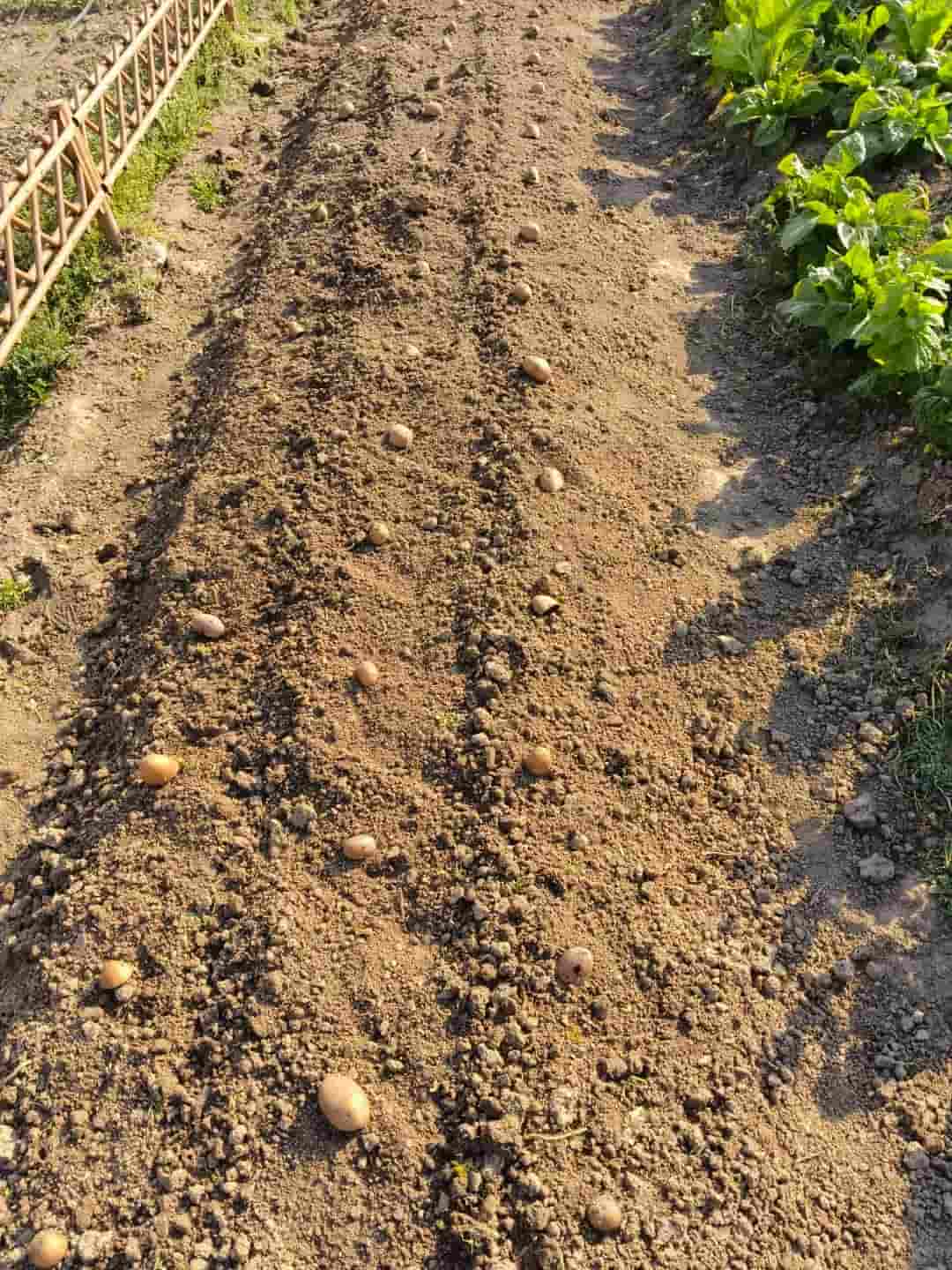
The trench method remained an emerald green masterpiece. The containers were officially “disappointing.” The 5-gallon bucket was the garden’s cautionary tale.
But the real drama was in Straw City. The Ruth Stout potatoes were up, but they looked… offended.
The pill bug issue was severe. The straw had also compacted and wasn’t holding moisture evenly.
My earlier success with this method? Pure, dumb luck. This year, it felt less like gardening and more like conducting a failing ecosystem experiment.
The Harvest: Judgment Day
A wise commercial potato farmer told me the secret: Wait for the plants to completely die back, then wait two more weeks.
This lets the skins “set” for storage. It was agony. I wanted to dig like a dog at the beach. But I waited.
Finally, the day arrived. My shovel and I were ready.
1. The 5-Gallon Bucket of Tears:
The harvest was as pathetic as the growth. I sifted through the cold, dense soil. My yield? Three to five marble-sized potatoes, totaling 0.6 ounces. I didn’t even need a bag; I could carry them in my cupped hand. They were the sad, wrinkled peas of the potato world. Verdict: Catastrophic Failure. Drainage isn’t a suggestion, friends. It’s the law.
2. The Grow Bag (3 Seed Potatoes):
Slightly less tragic. I dumped out the bag to find a handful of beautiful, but tiny, “new potatoes.” Total: 15 potatoes, 12.1 ounces. Less than an ounce per seed potato planted. For all the hype, it was underwhelming. The bags dried out far too fast in our summer heat.
3. The Ruth Stout Rebellion:
The harvest was easy—just pull back straw. The results were not. Many potatoes were green (solarized from sun exposure through the straw). Others had tiny chew marks (raccoon appetizers?). Many were tiny and underdeveloped.
The haul: A seemingly impressive 43 potatoes! But the weight told the real story: only 2 pounds, 13 ounces. A lot of spuds, but not a lot of potato.
4. The Deep Dive (12-Inch):
The star of the single-plant show! Digging down was an adventure. Potatoes were stacked along the stem like coins in a vault. I did find a few rotten ones at the very bottom (my fault for leaving them too long). The count: 24 potatoes, weighing a whopping 3 pounds, 9.2 ounces. The highest yield from a single plant!
5. The Surgical Strike (Cut in Half):
The halves did valiantly! Yield: 21 potatoes, 2 pounds, 15.6 ounces. Slightly less than the deep dive, but an excellent return for one seed potato. This method is a winner if you’re trying to stretch your seed stock.
6. The Shallow Shuffle (6-Inch):
Fewer potatoes, but chonkers. These were dense, baking potatoes. Harvest: 10 potatoes, 2 pounds, 7.8 ounces. Quality over quantity.
7. The Classic Trench Method (The Champion):
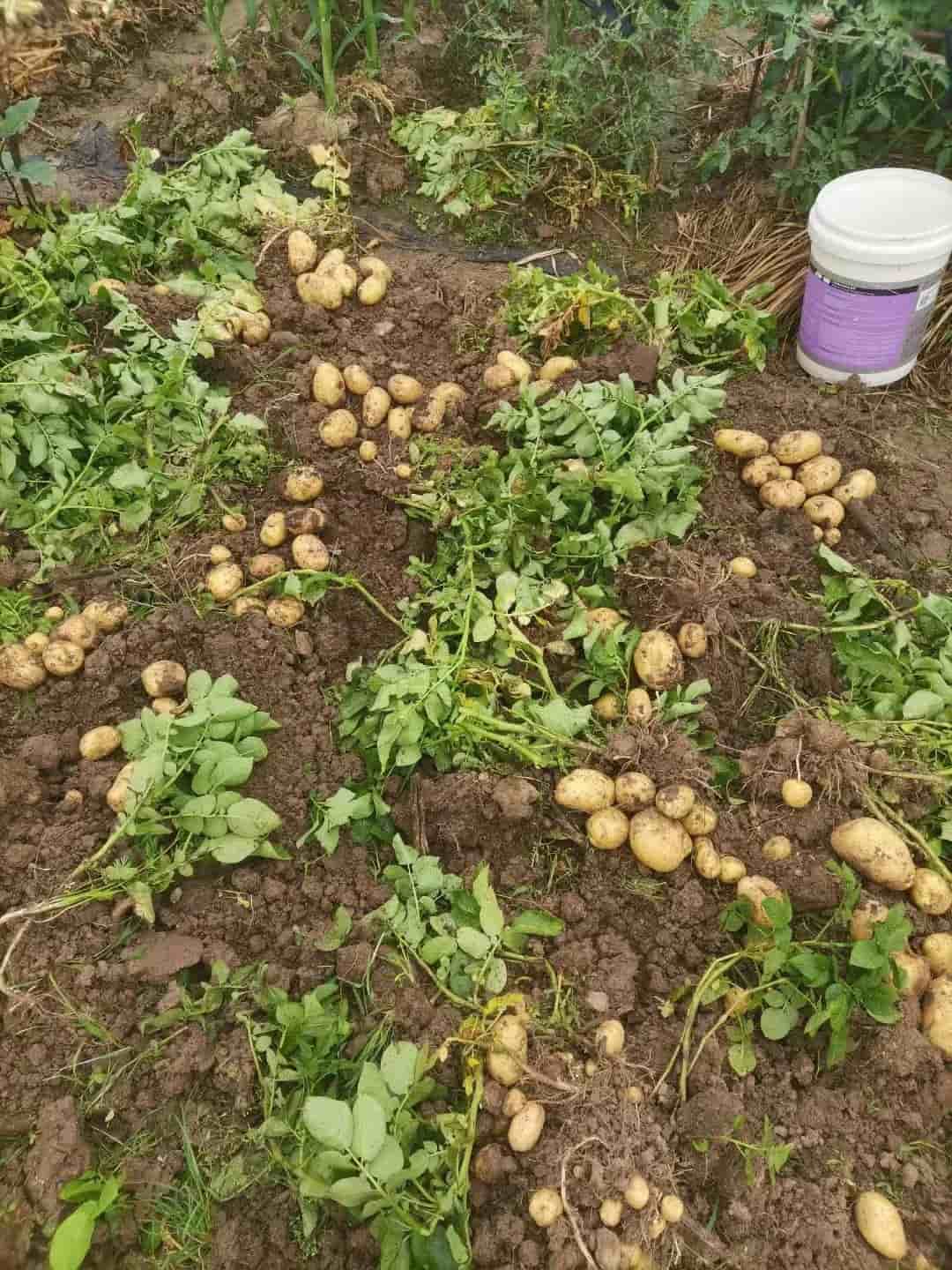
This was the moment. As I dug into the first hill, it was like a potato piñata exploded. They were everywhere. Uniform, clean, perfectly sized. Hill after hill, the harvest basket filled.
The final tally for five plants: 72 potatoes. Eleven pounds of glorious, starchy gold.
That’s an average of over 10 potatoes and over 2 pounds per plant. It wasn’t just a win; it was a landslide.
The Final Ledger of Dirt & Glory
- 5-Gallon Bucket: 0.6 oz (The Joke)
- Grow Bag: 12.1 oz (The Disappointment)
- Ruth Stout: 2 lb 13 oz (The Messy Compromise)
- 6-Inch Deep: 2 lb 7.8 oz (The Quality Specialist)
- Cut Potato: 2 lb 15.6 oz (The Efficient Economist)
- 12-Inch Deep: 3 lb 9.2 oz (The Productive Overachiever)
- Classic Trench: 11 lb TOTAL (The Undisputed Champion)
So, What Did We Learn?
Containers: They’re finicky. Buckets must have drainage. Grow bags need obsessive watering. For the effort, the yield just didn’t justify the hype for me.
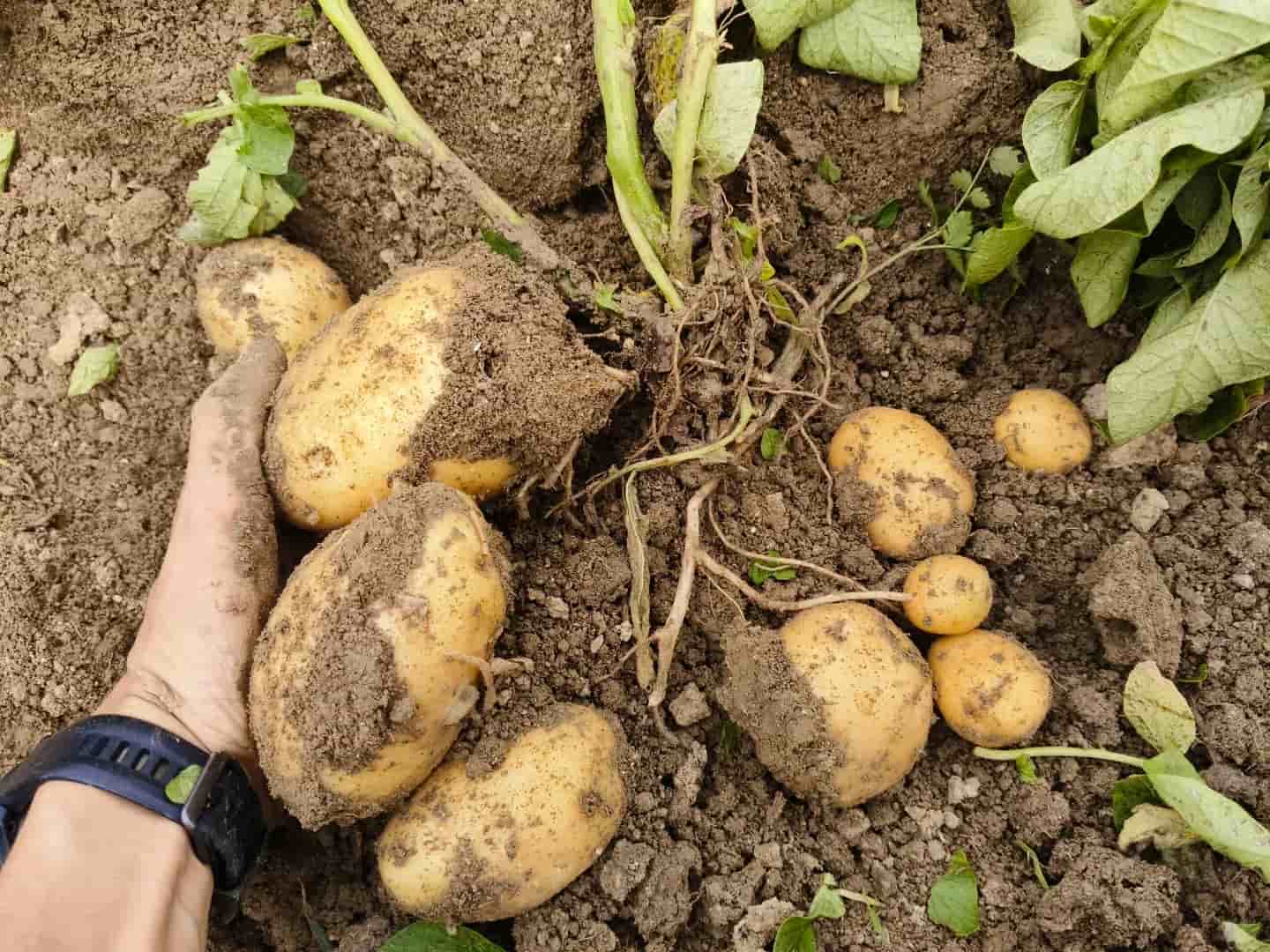
In-Ground Insights: Cutting works! Deep planting (12 inches) yielded the most per plant. But shallow planting gave me the biggest, densest singles.
Trench vs. Ruth Stout: This was the showdown. The trench offered protection from sun, pests, and weather.
The Ruth Stout method offered exposure to all of the above. The trench potatoes were pristine; the straw potatoes were green, chewed, and uneven.
For my money and climate, the trench is the safer, more reliable bet.
My Final, Humble Recommendation
If you want the best overall yield of usable, storable potatoes, here’s your playbook:
Dig a trench.
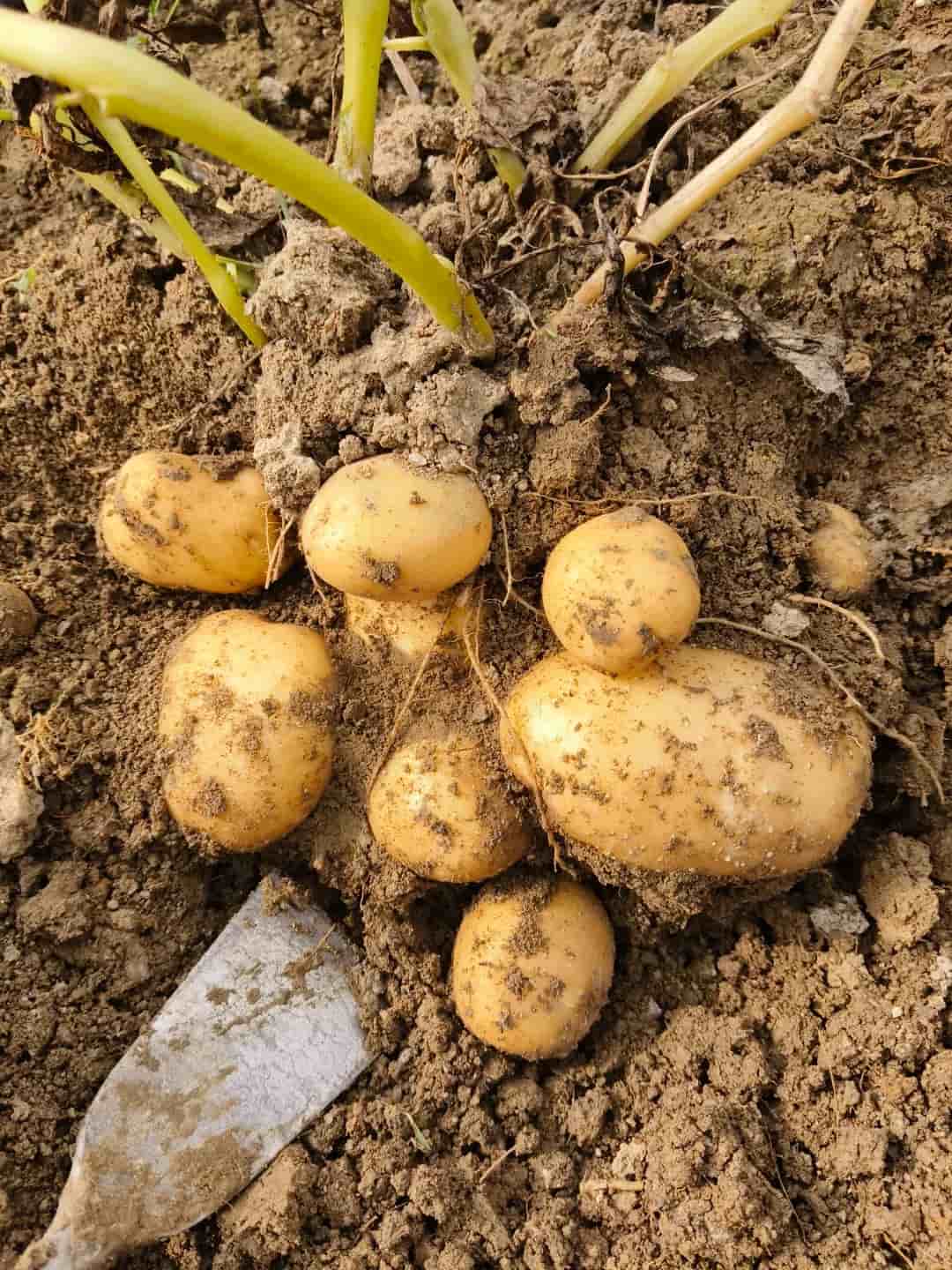
Plant your seed potatoes deeper than you think—shoot for 8-12 inches. Hill them up if you can.
Why? More buried stem means more places for potatoes (stolons) to form. It gives them a longer, cooler production zone.
It protects them from the elements. It’s not the sexiest method on Instagram, but it is the one that will fill your root cellar.
Closing Thoughts
This experiment was messy, imperfect, and absolutely enlightening. The “best” method can depend on your soil, your climate, and how much you like to gamble.
The Ruth Stout method might be brilliant in a different year or location. The grow bags might thrive with drip irrigation.
But for me, the humble trench, the method of our grandparents, dug deep and delivered a champion’s bounty.
It reminded me that sometimes, the old ways persist for a reason.
So, get out there and get planting! Try your own experiment. Be a better scientist than I was (maybe drill those holes).
But most importantly, get your hands dirty. There’s a world of potato potential waiting under there, and half the fun is digging it up.