Picture this: I’m hosting a dinner party, feeling fabulous in my new outfit, when my first guest arrives early.
I fling open the door with a warm “Welcome!” only to watch her immediately trip over a pile of shoes, narrowly avoid knocking over yesterday’s mail mountain, and then awkwardly stand there with nowhere to put her coat.
Not exactly the graceful entrance I had envisioned.
Your entryway isn’t just a place to dump your keys and kick off your shoes (though, let’s be honest, we’ve all been guilty of treating it that way).
It’s actually the physical and psychological transition between the chaos of the outside world and the sanctuary of your home.
The good news is that with some thoughtful styling, your entryway can become a space that not only functions brilliantly but also reflects your personality and gives visitors a sneak preview of your home’s overall vibe.
So let’s dive into the elements that will transform your entryway from a chaotic catch-all to a welcoming introduction to your home!
Key Elements to Consider in Entryway Design
1. Layered Lighting: Because Nobody Looks Good in the Dark

If you’ve ever tried to check your appearance in a dimly lit hallway mirror before heading out , you’ll understand why lighting is at the top of our list.
When I first tackled my entryway makeover, I thought one overhead light would do the trick. Spoiler alert: it didn’t.
Here’s the breakdown of lighting types you should consider:
Ambient lighting is your base layer, providing overall illumination so nobody’s fumbling around in the dark. A decorative pendant light or chandelier can serve as a stunning focal point that makes guests look up and go “oooh” the moment they step inside.
Task lighting is exactly what it sounds like – lighting that helps you accomplish tasks, like finding your keys, checking your lipstick, or making sure you haven’t put your sweater on inside out (a personal recurring challenge).
Accent lighting draws attention to specific features you want to highlight, like artwork or architectural details. Picture lights above a beautiful painting or small directional spotlights can create this effect.
Mood lighting is the cherry on top – it’s what creates atmosphere and makes everyone look like they’re perpetually in a soft-focus camera lens. Think warm-glow bulbs, candles (real or flameless), or even string lights for a whimsical touch.
When determining your lighting needs, ask yourself:
- How much natural light does your entryway get?
- What activities typically happen in this space? (Key finding, mail sorting, shoe tying, last-minute mirror checks?)
- Are there special features you want to highlight?
- What’s your desired ambiance?
2. Mirrors: For When You Need to Check If There’s Spinach in Your Teeth
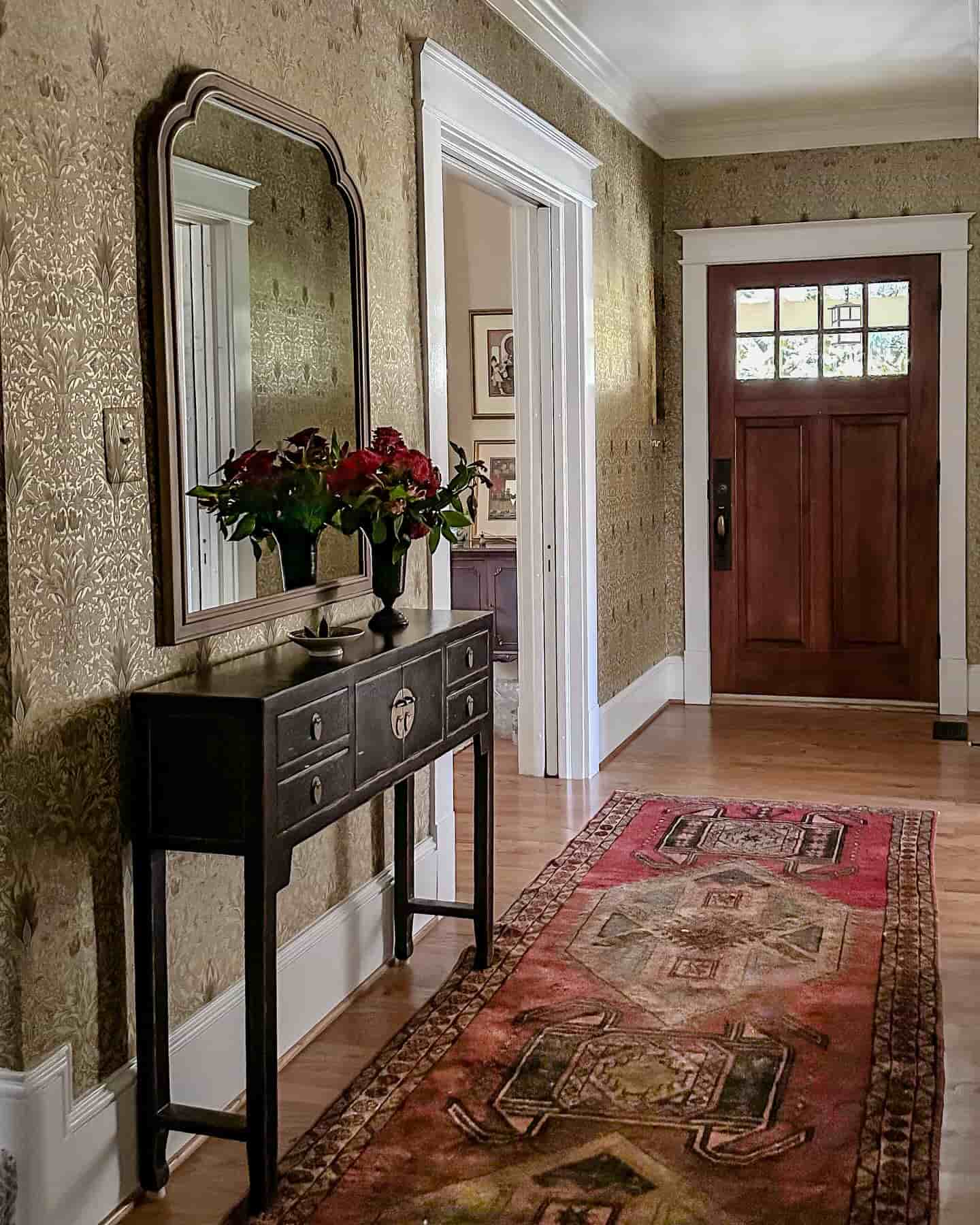
Mirrors in an entryway are non-negotiable in my book. Not just because I’m slightly vain (okay, more than slightly), but because they’re multitasking marvels that serve both practical and aesthetic purposes.
Functionally, a well-placed mirror gives you and your guests that crucial last chance to check your appearance before facing the world.
Is your collar straight? Is your hair doing that weird thing again? Is there, indeed, spinach in your teeth from lunch? These are important life questions that a good entryway mirror helps answer.
Mirrors also bounce and circulate light around the room, amplifying both natural daylight and your carefully planned lighting scheme.
It’s like getting extra mileage out of every light source – efficiency at its most beautiful!
3. Surface Options: A Place to Put Your Stuff (That Isn’t the Floor)

We all need somewhere to dump our keys, mail, sunglasses, and the random receipts we’re convinced we might need someday.
Without a designated surface in your entryway, these items tend to create what I call “horizontal surface syndrome” – the mysterious phenomenon where any flat surface in your home eventually becomes covered in random stuff.
A console table or hall table is the traditional hero here, providing both a stylish focal point and a practical landing spot for daily essentials.
When I finally invested in a slim console table for my entryway, the transformation was immediate.
But what if your space is tighter than skinny jeans after Thanksgiving dinner?
Fear not! Small-space solutions abound:
A wall-mounted shelf can provide surface area without taking up precious floor space. Even a narrow shelf just deep enough for keys and a small dish can make a huge difference.
A pedestal table with a small footprint can tuck into a corner while still providing a spot for essentials.
4. Storage Solutions: Because Coats Don’t Belong on the Floor
If there’s one thing that can make an entryway go from “Welcome to my lovely home” to “Welcome to my chaotic life” in seconds flat, it’s lack of storage.
Storage needs to be both practical and stylish – a tall order, but definitely achievable.

Here are some storage options to consider:
Coat closets are the gold standard if you’re lucky enough to have the space. If your closet is currently a disorganized black hole (I’ve been there), consider a closet refresh with proper hangers, hooks on the inside of the door for bags and accessories, and maybe even a shoe rack on the floor.
Hall or coat stands are perfect for homes without closet space. They have a charming, old-world vibe that can add character to your entryway.
Wall hooks are perhaps the most versatile option. They can be arranged in countless configurations, take up zero floor space, and can be as simple or decorative as you like.
Baskets are the unsung heroes of entryway storage. They corral everything from shoes to dog leashes to winter accessories, and they look good doing it. The best part? When unexpected guests are coming, you can quickly toss random clutter into them and instantly look organized. (We all do it, don’t pretend you don’t.)
Umbrella stands might seem old-fashioned, but they’re incredibly practical. There’s nothing worse than a collection of wet umbrellas dripping all over your floor.
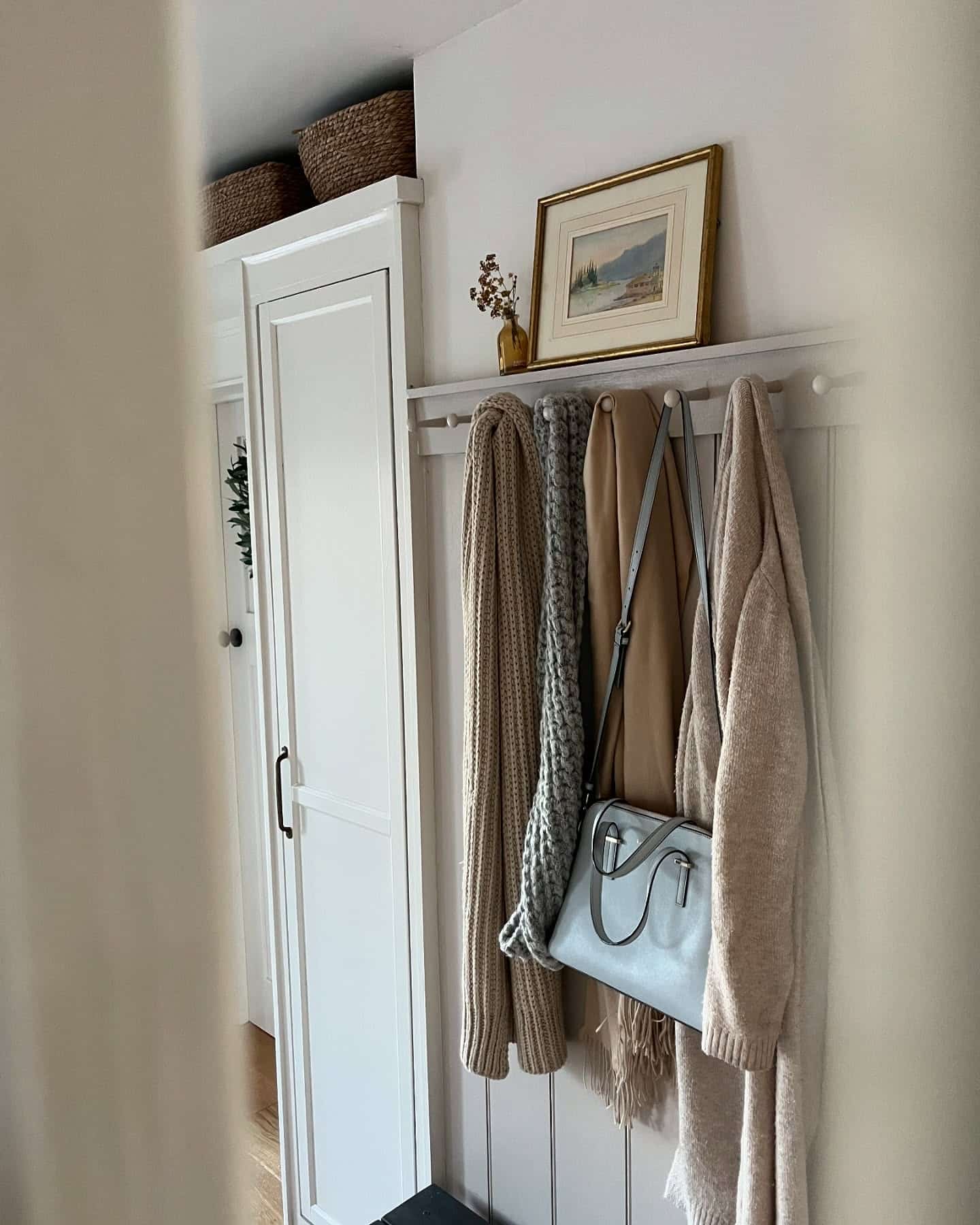
When determining your storage needs, ask yourself:
- How many people live in your home?
- What seasons do you experience? (Winter coats take up way more space than summer jackets)
- What items do you regularly need to access when coming or going?
- Do you have children whose stuff needs to be accessible at lower heights?
- Do you have pets with walking essentials to store?
5. Seating Options: Give Your Guests (and Yourself) a Place to Perch
There are few things more awkward than trying to put on or take off shoes while standing on one foot, doing what I call the “shoe removal hop” – that precarious dance where you’re one wobble away from crashing into a wall.

If you’ve got the space to spare, consider these seating options:
Slipper chairs are those armless, usually low-profile chairs that can tuck neatly into a corner. They provide comfortable seating without taking up too much visual or physical space.
A comfy armchair can make a grand statement in a larger entryway and creates a welcoming spot for guests to sit while waiting.
A slim bench provides seating without the bulk of a full chair and can serve multiple people at once. It’s the efficient choice for families or households with frequent guests.
Built-in storage benches are the overachievers of entryway seating, providing both a place to sit AND hidden storage. They’re like the straight-A students of furniture – doing multiple jobs excellently.

But what if your entryway is more postage stamp than grand foyer? Fear not! For compact areas, consider:
Lightweight stools that can be easily moved around as needed. I have a pair of nesting ottomans that can be pulled out when guests arrive and tucked away when not in use.
Ottomans that tuck under console tables are perhaps the cleverest space-saving solution. They’re there when you need them, invisible when you don’t.
6. Flooring Considerations: Because First Steps Matter

The floor of your entryway takes more abuse than perhaps any other surface in your home. It’s the landing zone for muddy boots, dripping umbrellas, sandy flip-flops, and whatever mysterious substances your kids or pets have managed to step in .
When choosing flooring for this high-traffic area, you need to consider both practicality and aesthetics. To determine your flooring needs, ask yourself these questions:
How much foot traffic does your entryway receive? My house is like Grand Central Station between my kids, their friends, and my inability to say no to hosting gatherings, so I needed something virtually indestructible.
Does the flooring need to be slip-resistant or washable? If you have young children, elderly family members, or live in a rainy/snowy climate, this is especially important.
What is the design aesthetic for your entryway? Your flooring should complement your overall decor while still being practical. No matter how gorgeous that white carpet looks in the showroom, I beg you to reconsider for your entryway.
7. Decor Elements: The Jewelry of Your Entryway

Once you’ve got all the practical elements sorted, it’s time for the fun part – decorating! The decor in your entryway should offer a preview of your home’s overall style, like a movie trailer that makes people excited to see the full feature.
This is your chance to incorporate artwork, vases, plants, and other decorative objects that create a welcoming atmosphere and express your personality.
For artwork, consider pieces that make a statement without being overwhelming. My entryway features a gallery wall of black and white family photos in mismatched frames – it’s personal, tells our story, and gives guests something interesting to look at while they’re taking off their shoes.
Plants bring life and energy to an entryway. If you’re blessed with natural light, a tall fiddle leaf fig or monstera can create drama and height. For less sunny spots, try snake plants, ZZ plants, or pothos, which are nearly impossible to kill (though I’ve certainly tested this claim).
Don’t forget the power of scent in creating a welcoming atmosphere! A subtly scented candle or diffuser by the door creates an immediate sensory experience for anyone entering your home. Just be careful not to go overboard – you want your entryway to smell inviting, not like you’re trying to mask something suspicious with seventeen different air fresheners.
Conclusion: It’s All in the Details
Creating a welcoming, functional, and beautiful entryway isn’t something that happens overnight.
The key is to balance practicality with beauty, function with form. An entryway that looks stunning but doesn’t meet your daily needs will quickly become frustrating, while one that’s purely functional without any aesthetic consideration won’t provide that welcoming feeling we all want when coming home.
Well, friends, we’ve walked through the ins and outs of entryway styling, from the practical necessities to the decorative flourishes that make a house feel like a home. Whether you’re working with a grand foyer or a sliver of wall next to your front door, I hope you’ve found ideas to make your entryway more functional, beautiful, and welcoming.
I’d love to hear how you’ve styled your own entryways! What challenges have you faced? What clever solutions have you discovered? Have you found the perfect balance between practical storage and beautiful styling? Drop a comment below and share your entryway triumphs (or disasters – those make the best stories).