If you’re like most parents, you’ve probably experienced the dreaded wardrobe avalanche. You know, the one where you open your child’s closet, and an overwhelming pile of clothes falls out, burying you in the latest fashion disasters—some of which still have tags on them! It’s a never-ending cycle: you buy clothes, they outgrow them in a blink of an eye, you find clothes, and then lose them again.
And let’s not even talk about the 48,000 tiny socks that are all mysteriously left sock-less, or the collection of onesies you kept “just in case” that your child clearly refuses to wear.
But fear not, my fellow parents.
In this post, we’re going to dive into how to organize your kids’ clothing in a way that’s not only practical but also incredibly simple.
Section 1: Understanding Your Kids’ Clothing Needs
Key Problem: Too Much Inventory
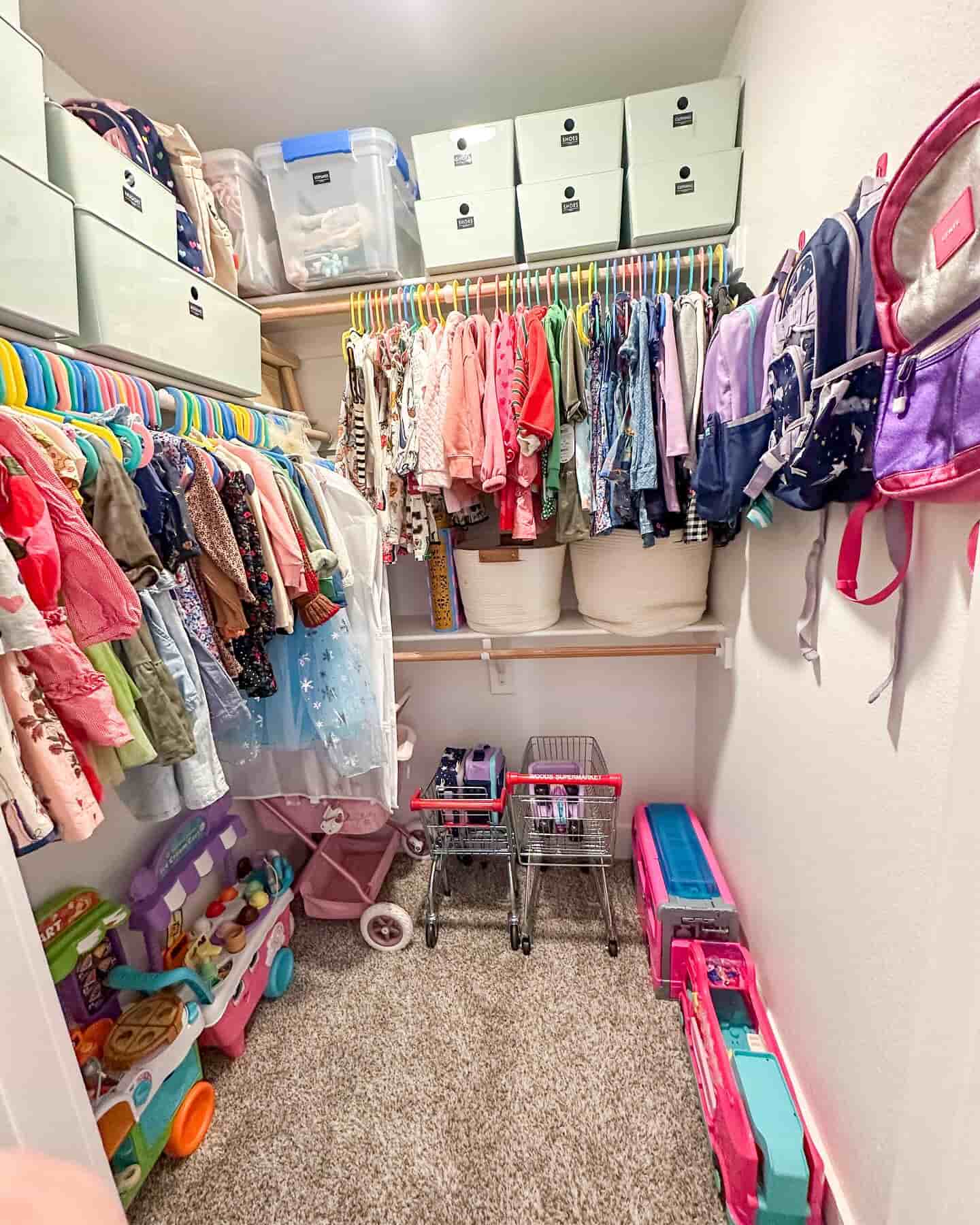
Let’s face it: as parents, we all think we need a ridiculous amount of clothing for our kids. After all, every season requires a new wardrobe, right?
And every cute outfit you see at the store? Well, it just has to come home with you. But here’s the catch—your kids don’t need half the stuff you buy.
I’ve learned that the hard way, as I stare at yet another pile of shirts that don’t fit anyone. It turns out that buying more doesn’t equal more organization. It equals more mess.
We’ve all been guilty of overstuffing drawers with clothes that our kids will likely wear once and then outgrow before they even get the chance to touch them again.
This overstocking leads to an impossible task every season: sorting through mountains of clothes that probably fit, maybe fit, or, let’s be honest, will never fit again because the child has shot up by 3 inches overnight.
Solution: Simplify the Wardrobe
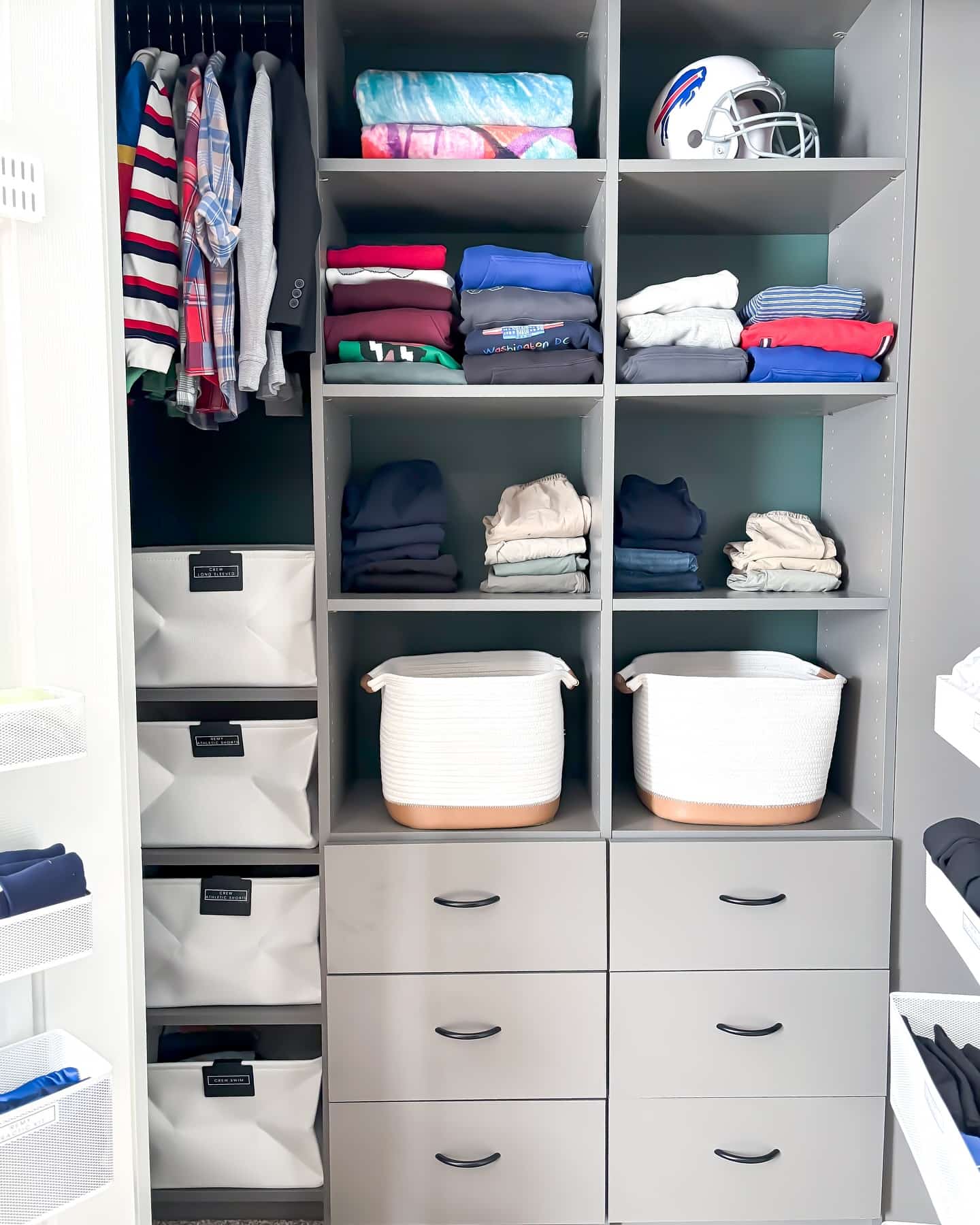
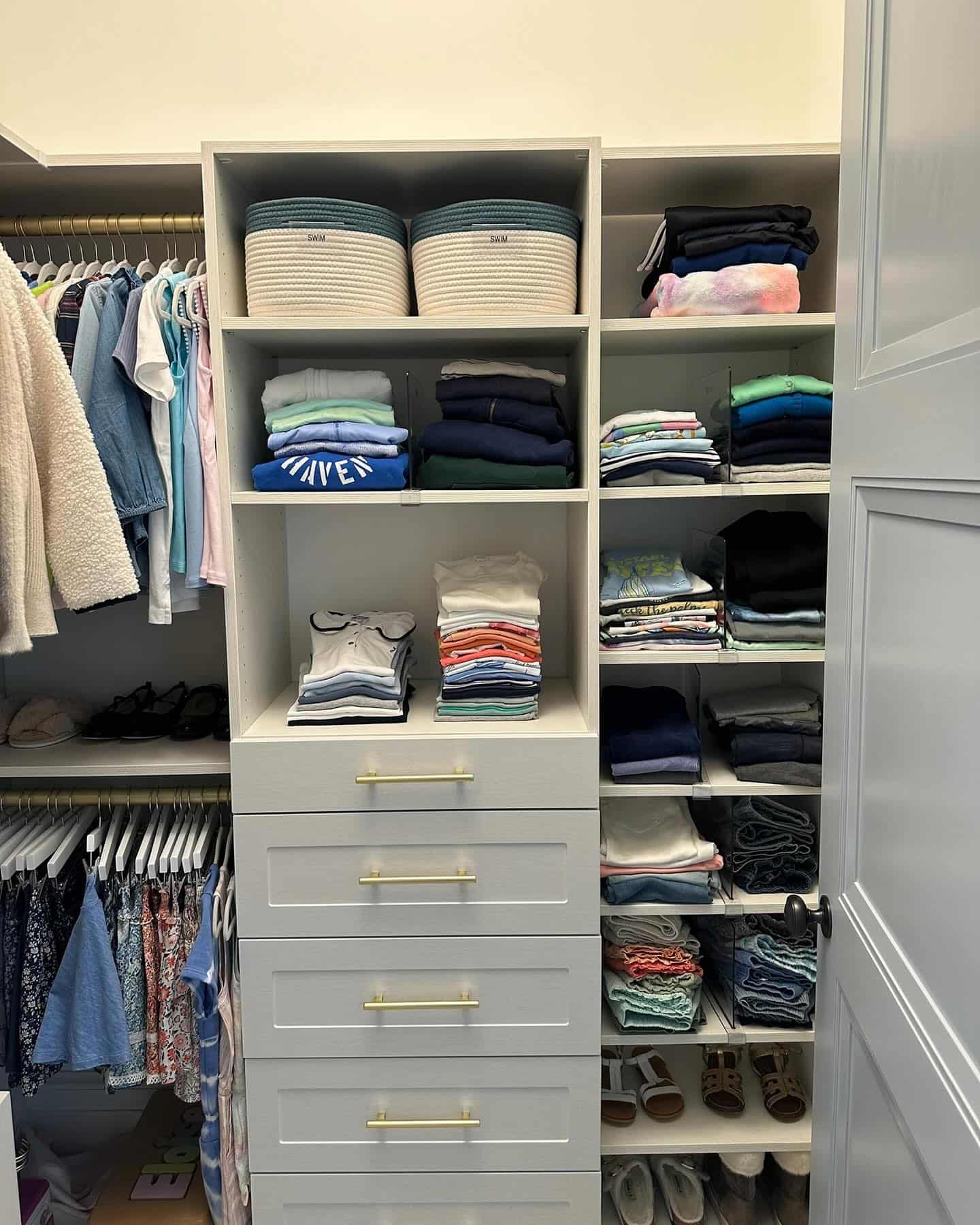
Instead of adding more, try simplifying the process.
We’re talking quality over quantity here, folks. If you’re in doubt, aim for around five tops and five bottoms per child per season.
Add in a jacket, a couple of dresses (or sweatpants, depending on the phase they’re in), and maybe a few pairs of shoes.
That’s it! A streamlined wardrobe means you’re only keeping what actually fits, and you can keep everything you have in rotation.
I remember when I made this change—it was an eye-opener. I went through my kids’ clothes, and all of a sudden, I had actual space in their drawers.
And my little ones had fewer clothes to choose from, which ironically made them a lot less overwhelmed. Less really does become more.
Section 2: Reduce Clothing Inventory
Practical Steps to Simplify
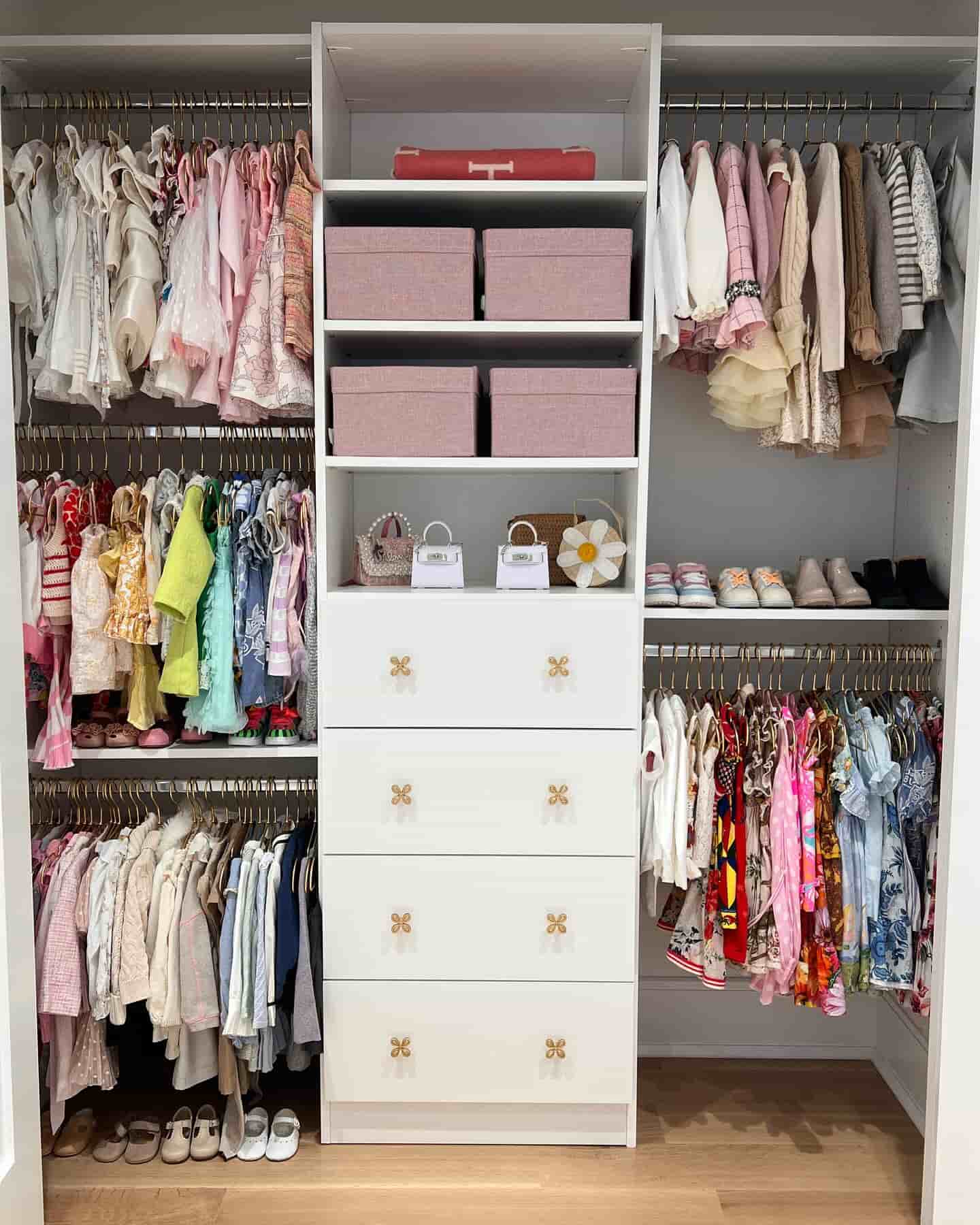
Okay, here comes the fun part—actually reducing the clothing inventory. You know that pile of clothing you’ve been avoiding for months? It’s time to face it head-on. Trust me, once you get started, you’ll wonder why you didn’t do this sooner.
Here’s how I tackled the clothing chaos:
Pull Everything Out: Yes, every single thing. Pull everything out of the drawers and closet. Yes, it’s going to be a mess. But I promise you, it’s worth it.
Sort, Sort, Sort: Sort the clothes into three main categories:
◦ Keep – Clothes that fit right now and are worn regularly.
◦ Store for Later – Clothes that are a size or season ahead.
◦ Donate/Pass On – Clothes that are too small, too worn out, or ones that your kids have absolutely zero interest in wearing.
- Be Ruthless: If it’s been a season (or two) since they’ve worn it, it’s time to let it go. Trust me, you won’t regret it. Keep only what’s functional and what you know your kids will actually wear.
I found this process incredibly freeing. Suddenly, I could see what my kids actually needed. I could donate the items that weren’t being worn, and I wasn’t tempted to buy more just for the sake of filling gaps.
Benefits of a Simplified Wardrobe
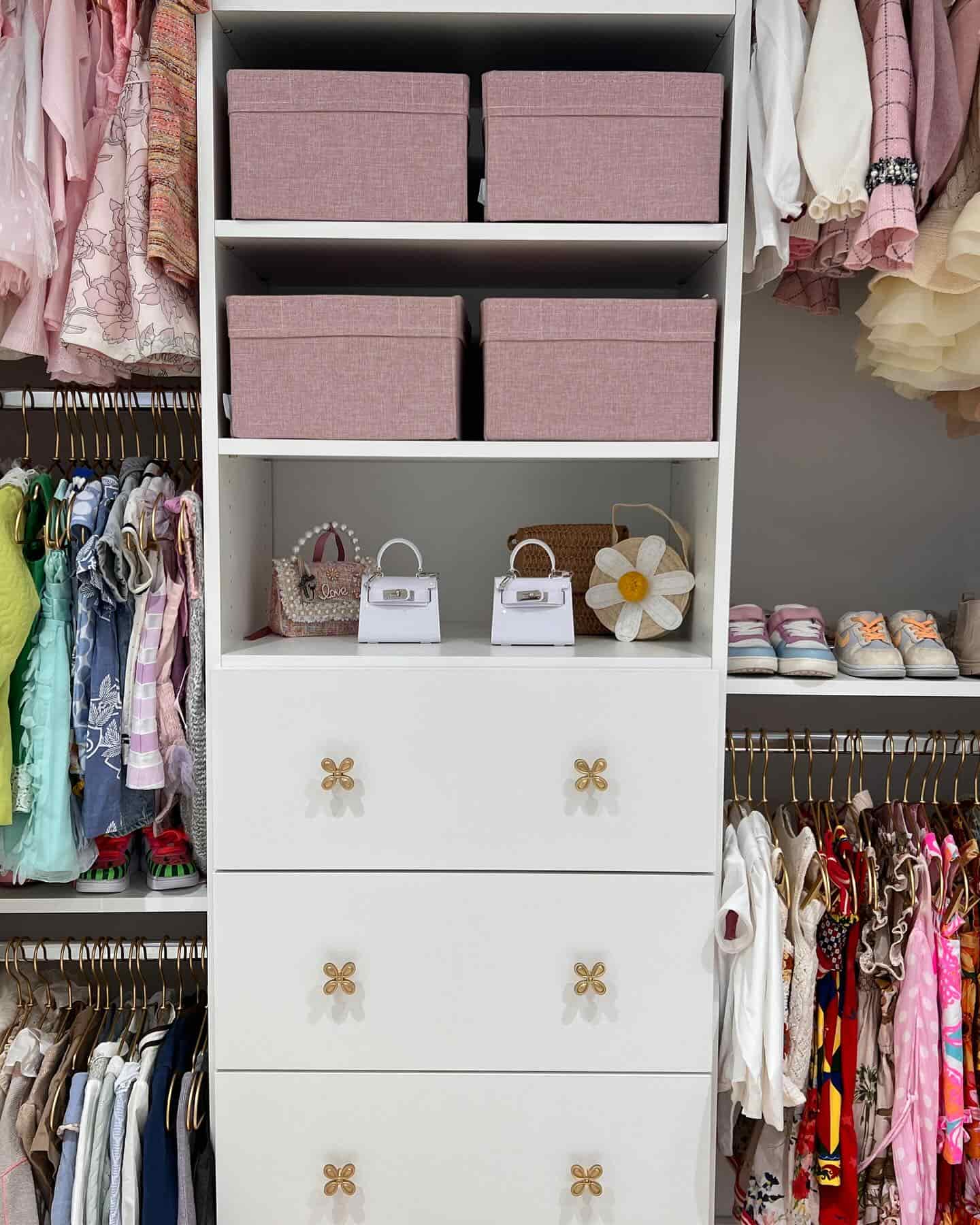
The benefits? Oh, they’re huge. First off, the clutter will almost vanish. No more digging through piles of clothing just to find the right size or the correct color for that event.
Once I made these changes, life got so much easier.
First off, the wardrobe became manageable.
No more piles of clothes I had to sift through to find the perfect outfit. With fewer clothes, it was also easier to get dressed in the morning.
And let’s be real: I didn’t have to feel guilty every time I opened their closet and saw something they hadn’t worn in months.
Section 3: Storing Clothes for Future Use
Storing for Growth
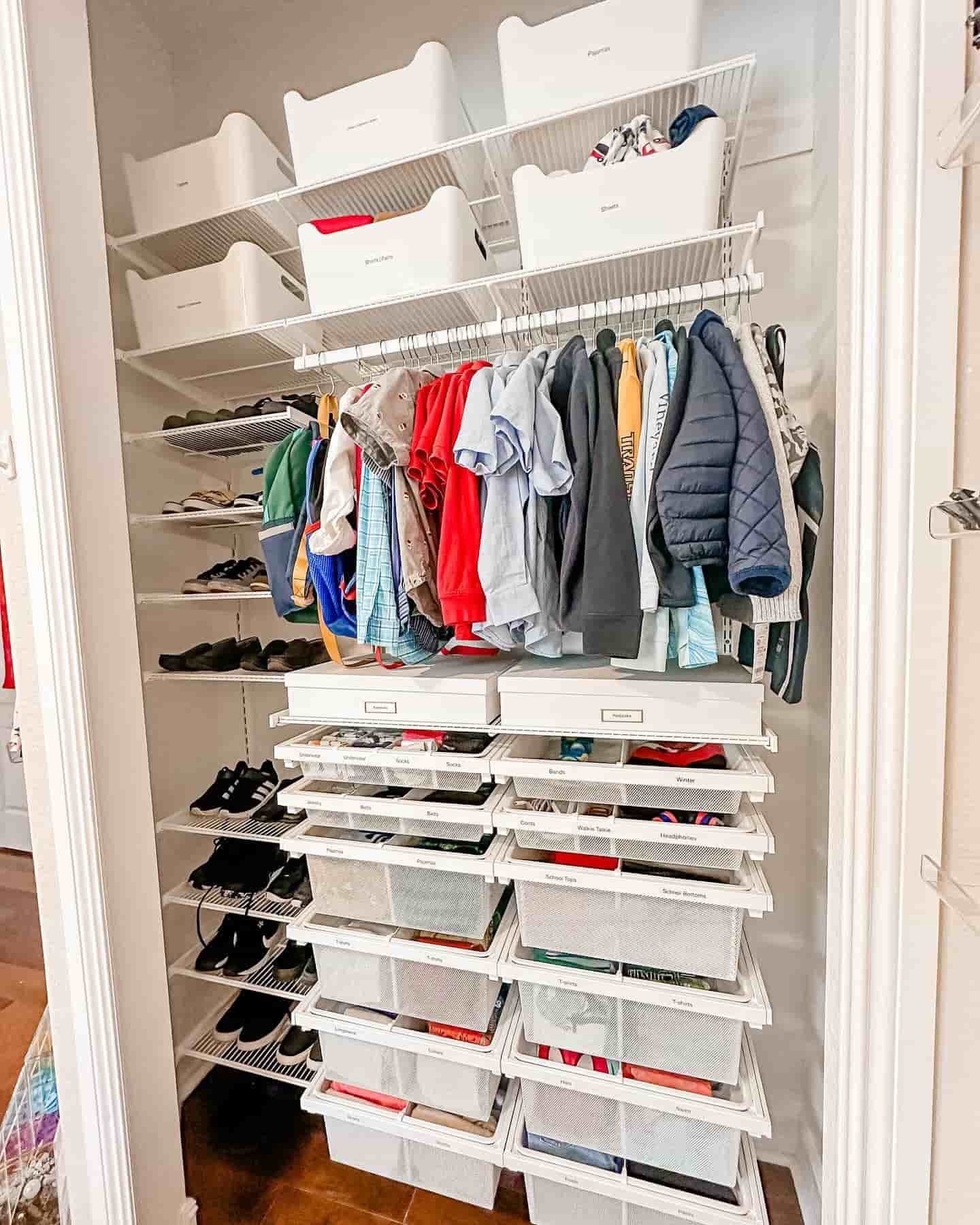
Kids grow faster than you can blink—so what do you do with all those clothes that are too big right now but will fit in the future?
Well, the best solution is to store them neatly so you can pull them out when the time is right.
I recommend using clear Rubbermaid totes.
They’re stackable, durable, and allow you to see what’s inside without opening every box.
Here’s how I organize the clothes for each season:
- I make a labeled bin for each child with the size and season, like “Size 6 Summer” or “Size 7 Winter.”
- I then keep these bins in an accessible area—usually in the basement or a dedicated storage closet.
- When the current season is over, I simply swap out the “grow-into” clothes and rotate the bins. If they’ve outgrown something already, I don’t need to store it again—I can donate it straight away.
This method has saved me so much time. Instead of scrambling to find clothes for the next season, everything is ready to go. And there’s no last-minute panic when my kid suddenly needs a new jacket.
Managing Hand-Me-Downs
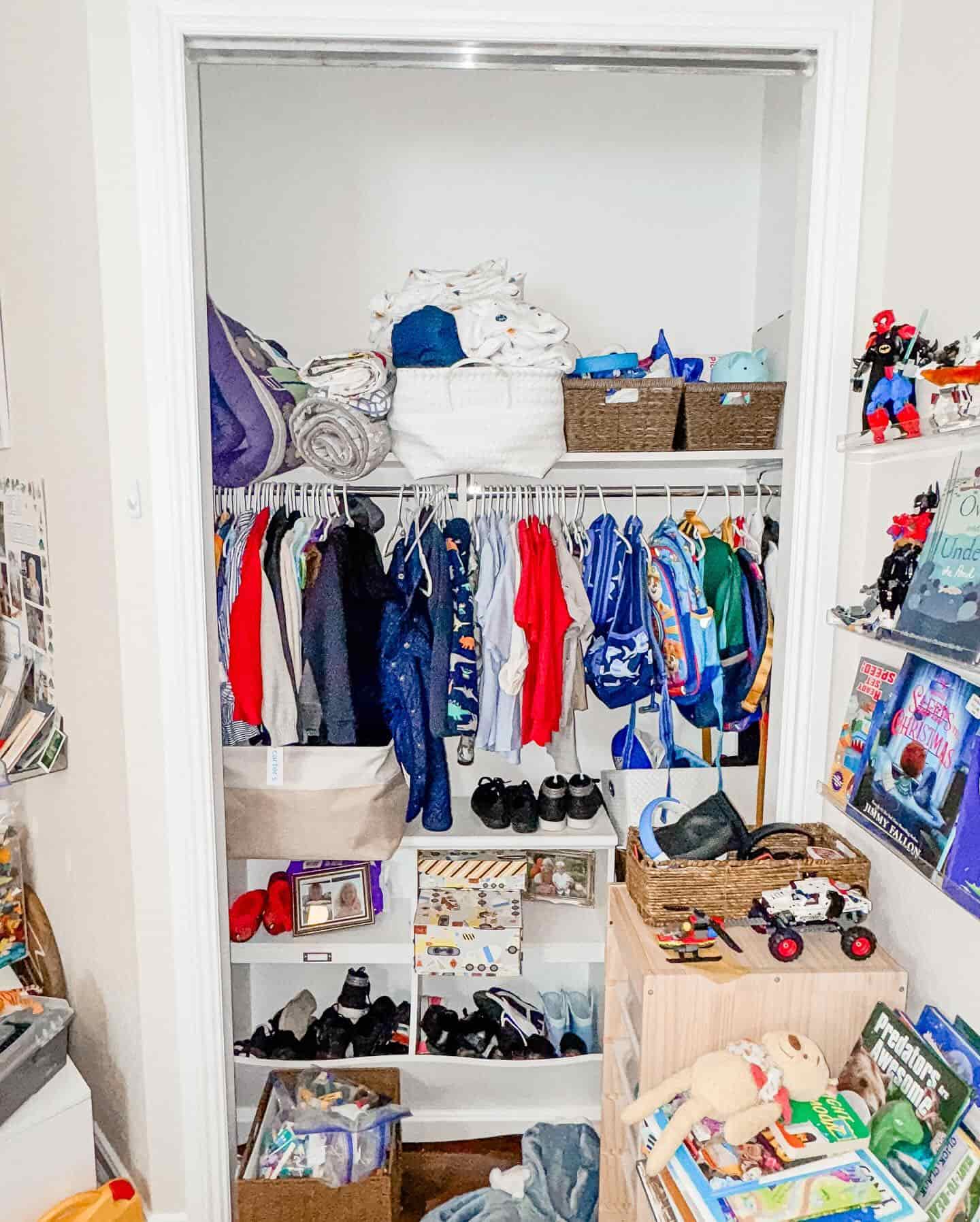
We all know the joy of receiving hand-me-downs, and it’s an amazing way to save money. But be realistic: not all hand-me-downs are worth keeping.
Hand-me-downs are a blessing and a curse. They can save you a ton of money, but they can also create a mountain of clutter.
If you’re lucky enough to receive a box of clothes, sort through them and only keep what is in good condition and what you’re sure your kids will actually wear.
I’ve been guilty of stockpiling hand-me-downs, thinking “I’ll get to it later,” but later never comes. Once I stopped keeping everything “just in case,” I was able to truly store only the best and most necessary items.
Section 4: Special Considerations – Storing Baby Clothes
Should You Store Baby Clothes for Future Use?
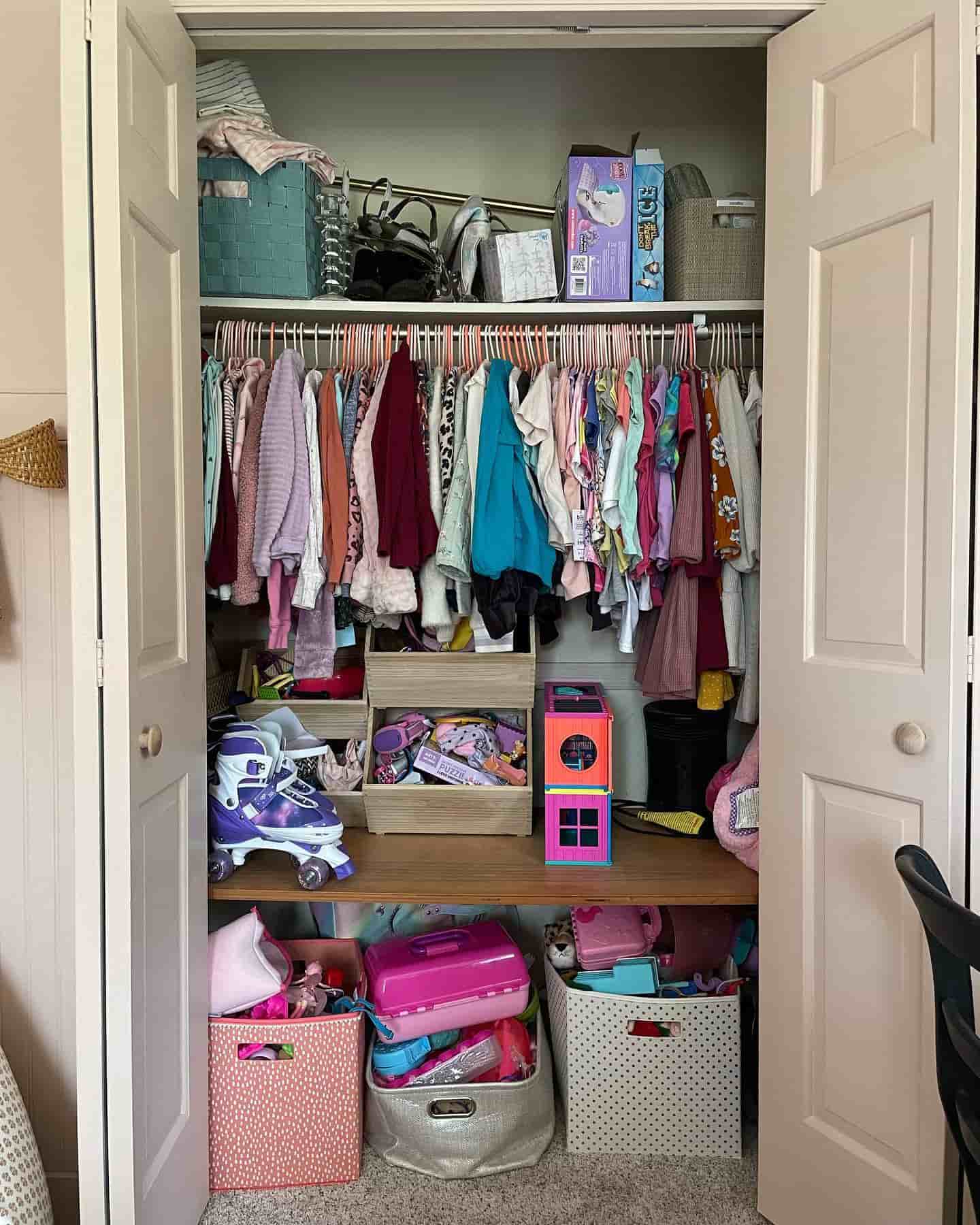
Ah, the baby clothes dilemma.
The tiny onesies, the adorable booties, and the precious little hats that your baby barely fit into before they grew out of them.
You might think, “I’ll just save these for the next baby!” But before you pile them all into a box, stop and think. Will you really need them?
Here’s the harsh truth: baby clothes are constantly changing in terms of style and practicality. Also, let’s be honest, babies don’t remember what they wore. (Seriously, who even remembers the onesies they wore as a baby?)
If you do want to keep something, I recommend only holding onto high-quality, timeless pieces—think a classic onesie, or the super-soft blanket that your aunt gifted you.
The Reality of Baby Clothes Storage
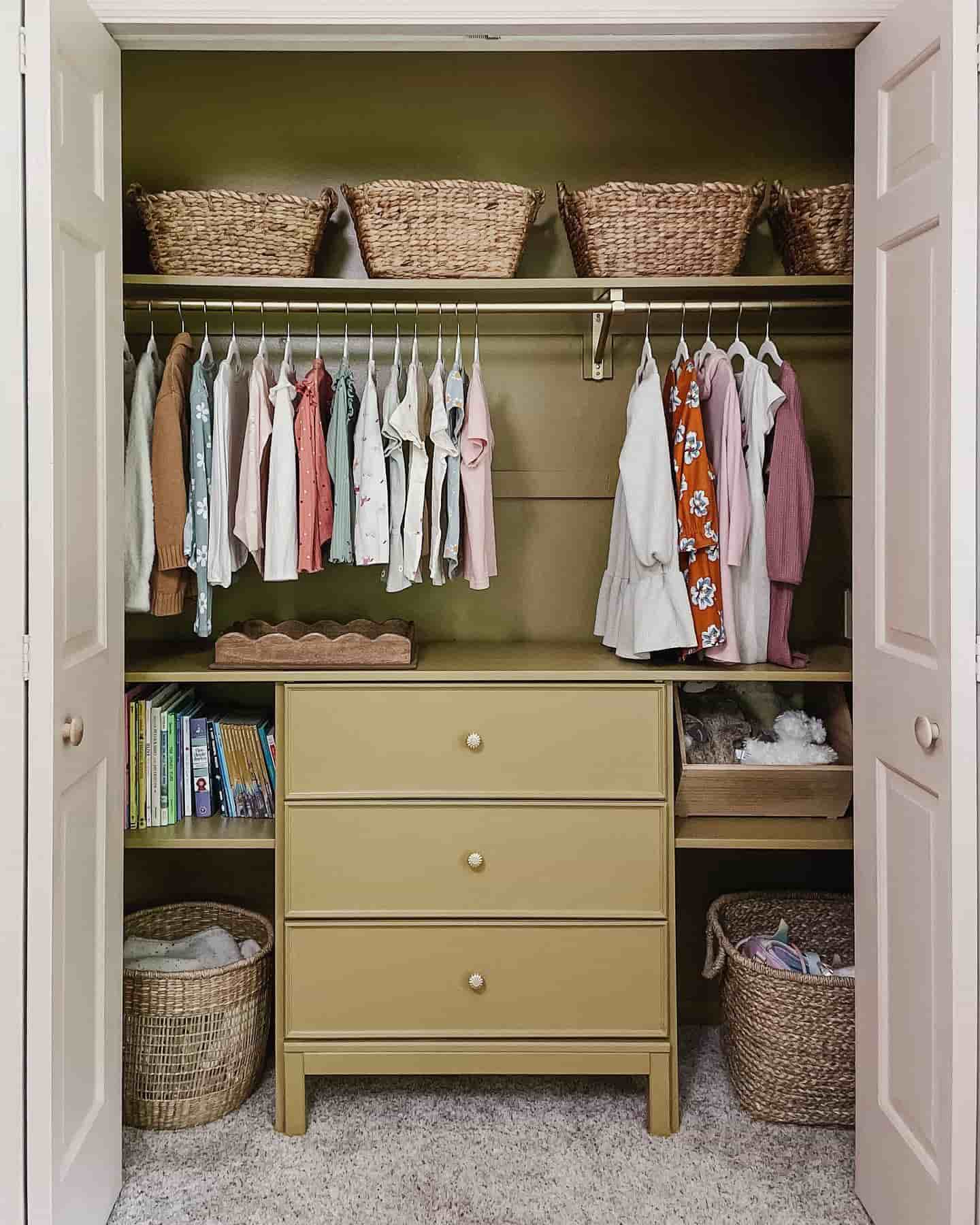
You know what’s funny? I once thought I was going to need every single piece of baby clothing for the next child.
Over the years, I’ve realized that a lot of baby clothes go unused. Styles change. Gifts pile up. And before you know it, you’re left with bags of clothes that your baby won’t wear again.
My advice?
If your baby clothes are in good condition, donate or pass them along.
It’s a relief to have less clutter and to know that someone else might get good use out of them.
Section 5: Additional Tips for Easy Access and Organization
Easy Access for Clothing Bins
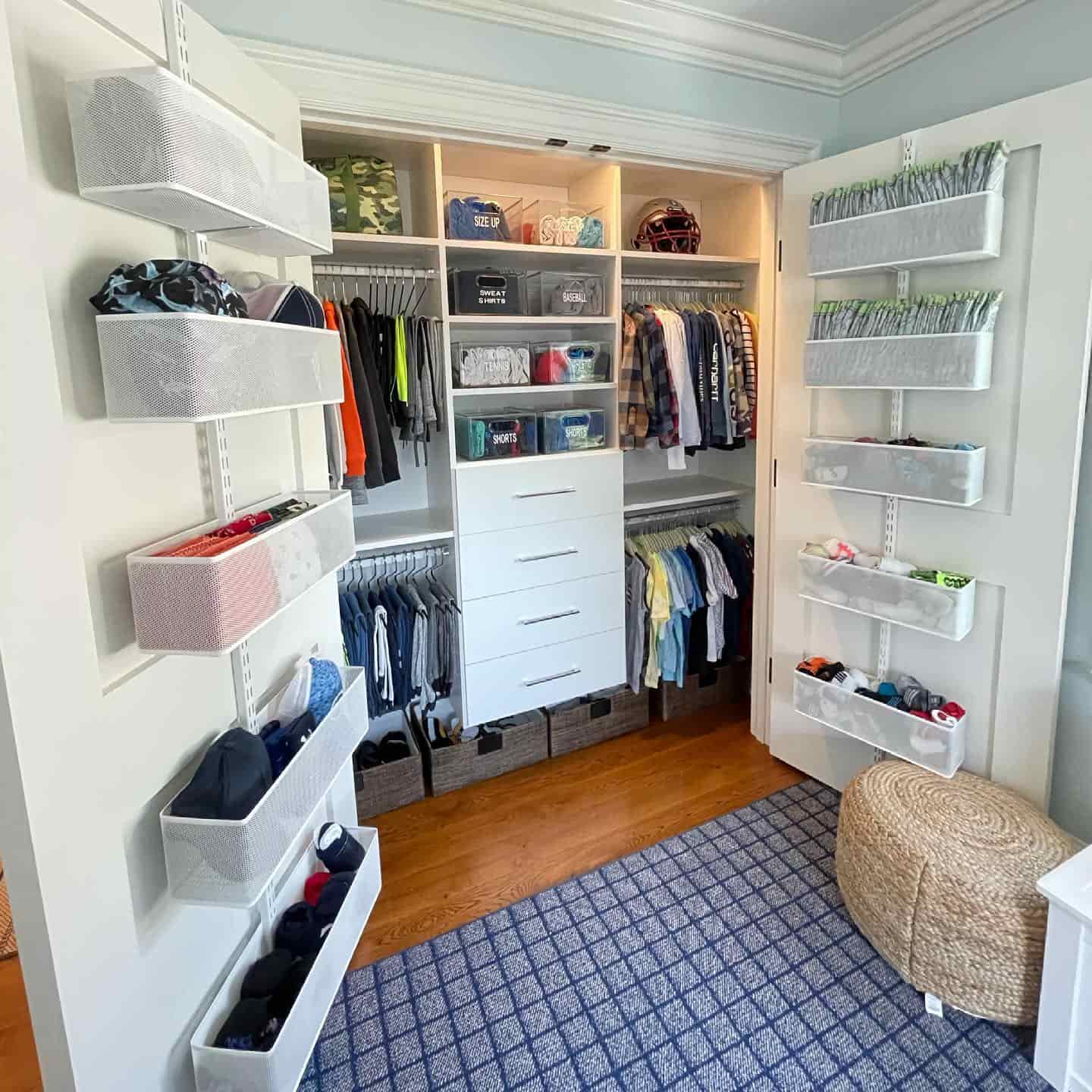
One of the best ways to stay on top of all this organizing is by keeping clothing bins in easy-to-reach spots.
Don’t store them in some dark, mysterious corner of the attic—put them in bedrooms or closets where you can easily grab them when the season changes or when you realize your child has grown two sizes in the span of a week.
How to Know When to Donate or Sell?
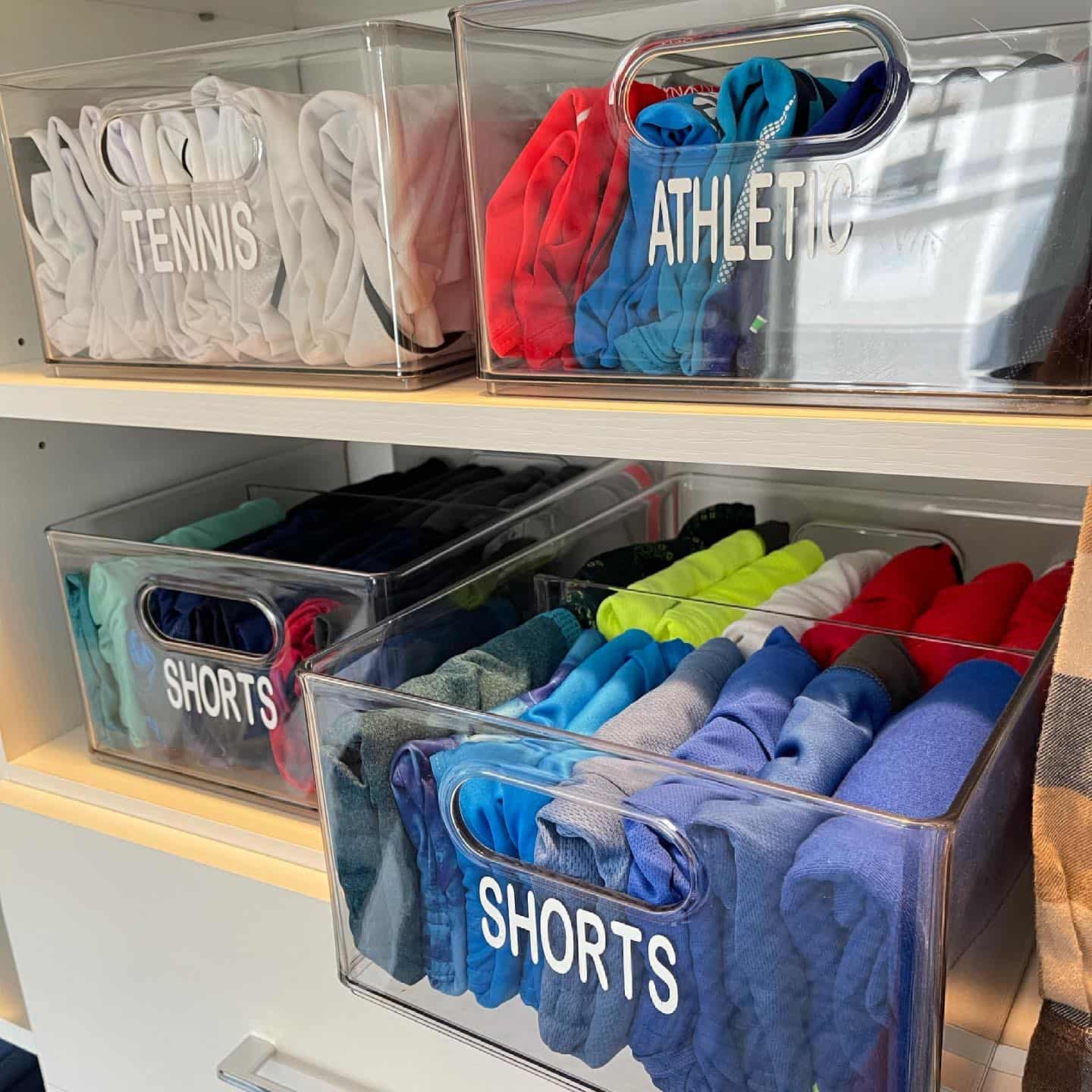
A good rule of thumb is to donate or sell clothes when your bins are overflowing, and the clothes are no longer useful.
Trust me, once you’ve sorted and organized everything, it’ll be much easier to spot when things need to go.
And you’ll feel that sweet sense of relief when you finally let go of that shirt your kid will never wear again.
Section 6: The Benefits of Simplified Clothing Storage
Peace of Mind and Less Guilt
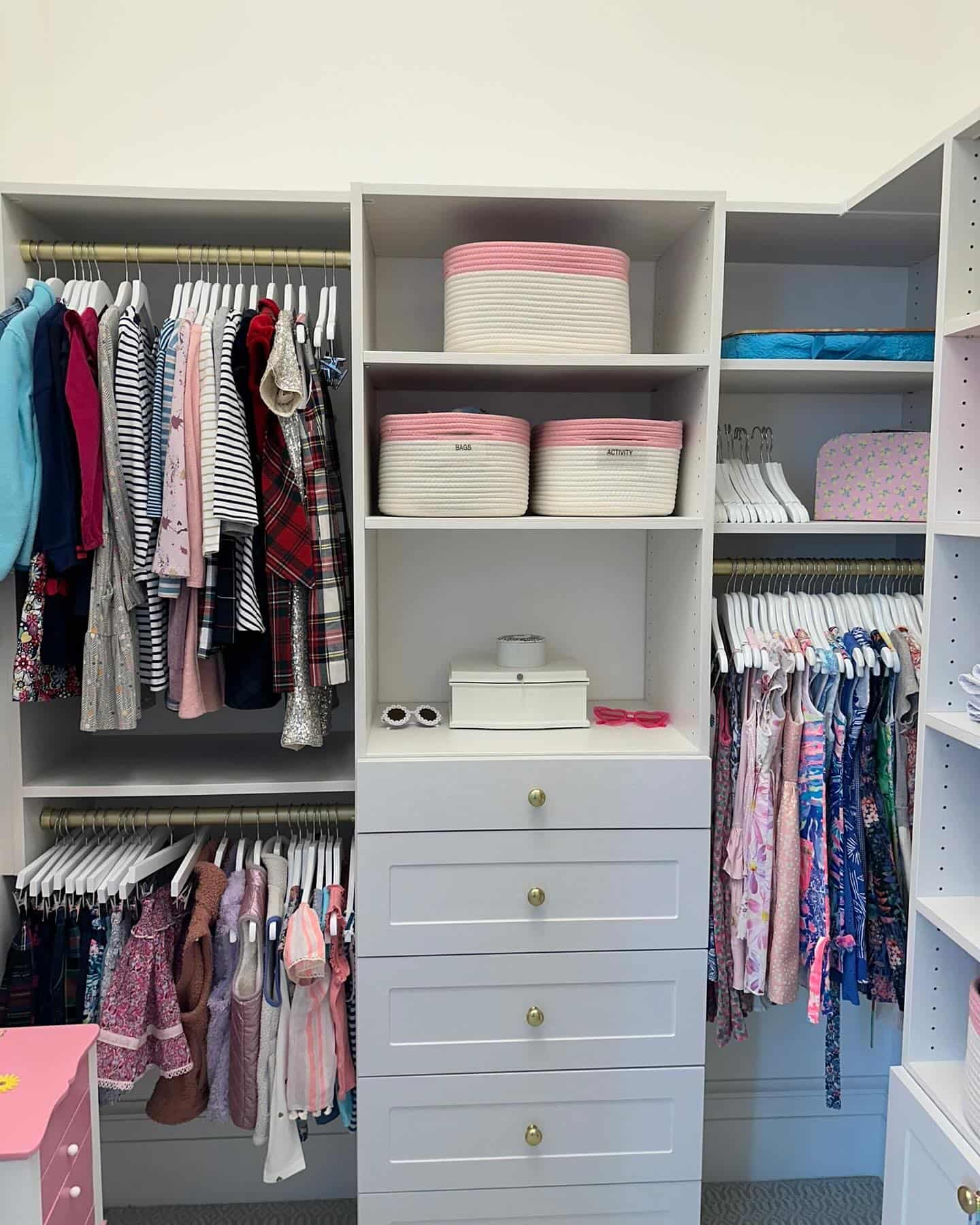
The peace of mind that comes with organizing your kids’ clothes is priceless.
When you know exactly what you have and where it is, mornings become less stressful.
And if you’ve ever been overwhelmed by the guilt of unused clothing, decluttering your kids’ wardrobe will provide the relief you need.
Saving Money
Let’s face it—kids grow fast, and it’s tempting to buy clothes just in case.
But when you simplify the wardrobe, you stop making unnecessary impulse purchases.
Instead, you buy only what’s needed, saving you money in the long run.
Conclusion
So there you have it—my journey toward simplifying kids’ clothing storage, complete with all the ups and downs (mostly downs, let’s be real).
If you take one thing away from this post, let it be this: reduce the clutter.
By simplifying your kids’ wardrobes, you’ll save time, money, and your sanity.
Plus, it’ll be easier to find those socks that never match in the first place.
Got your own tips for keeping kids’ clothes organized? Drop them in the comments!